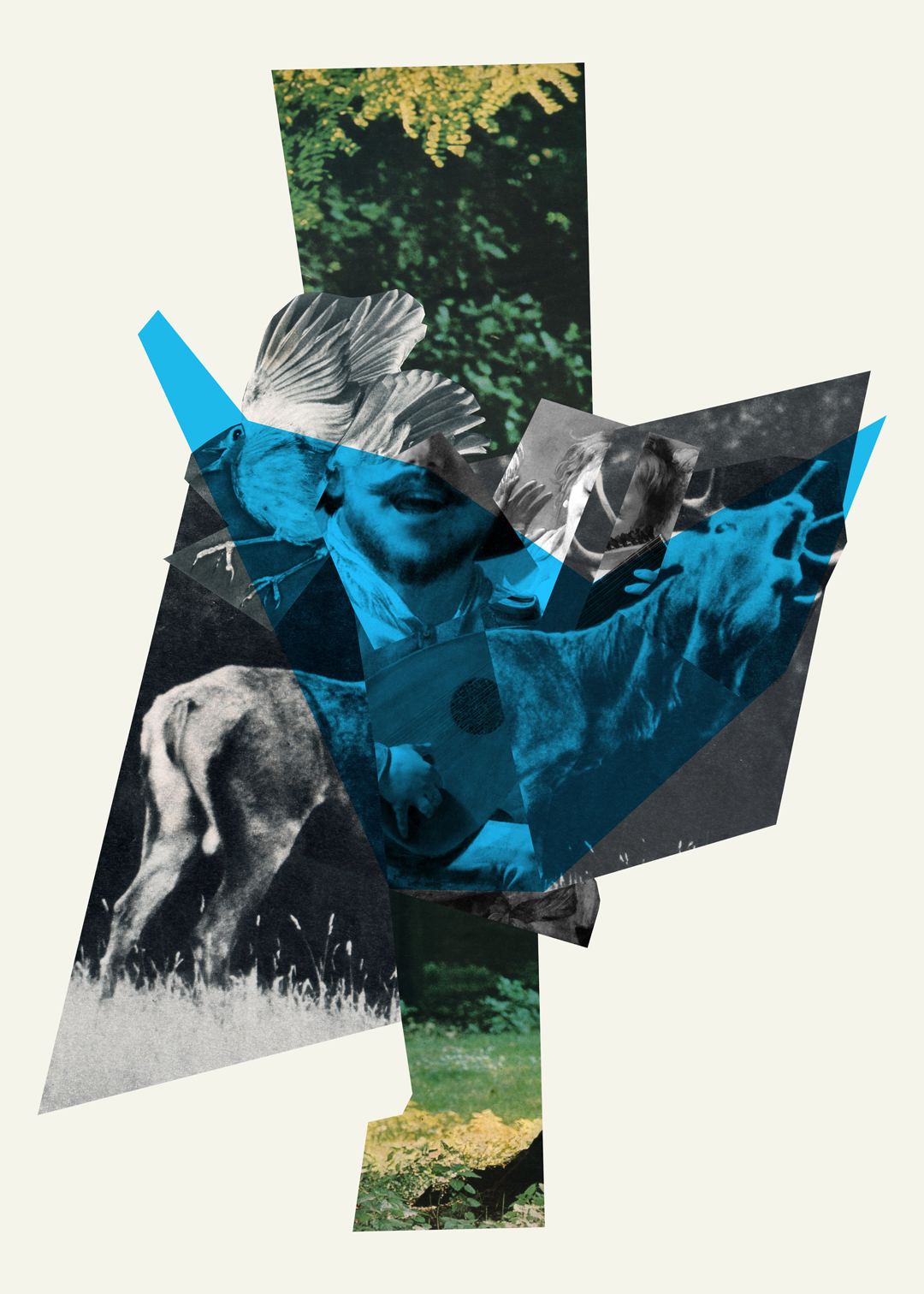
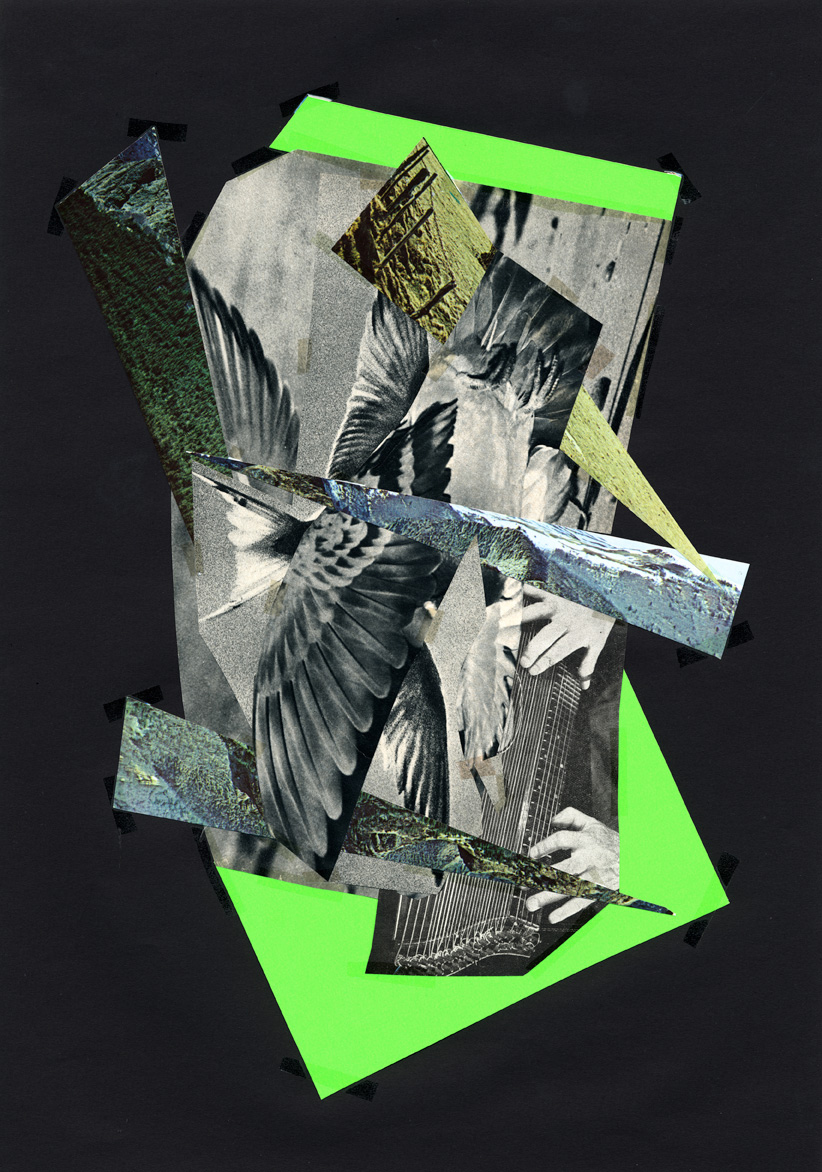
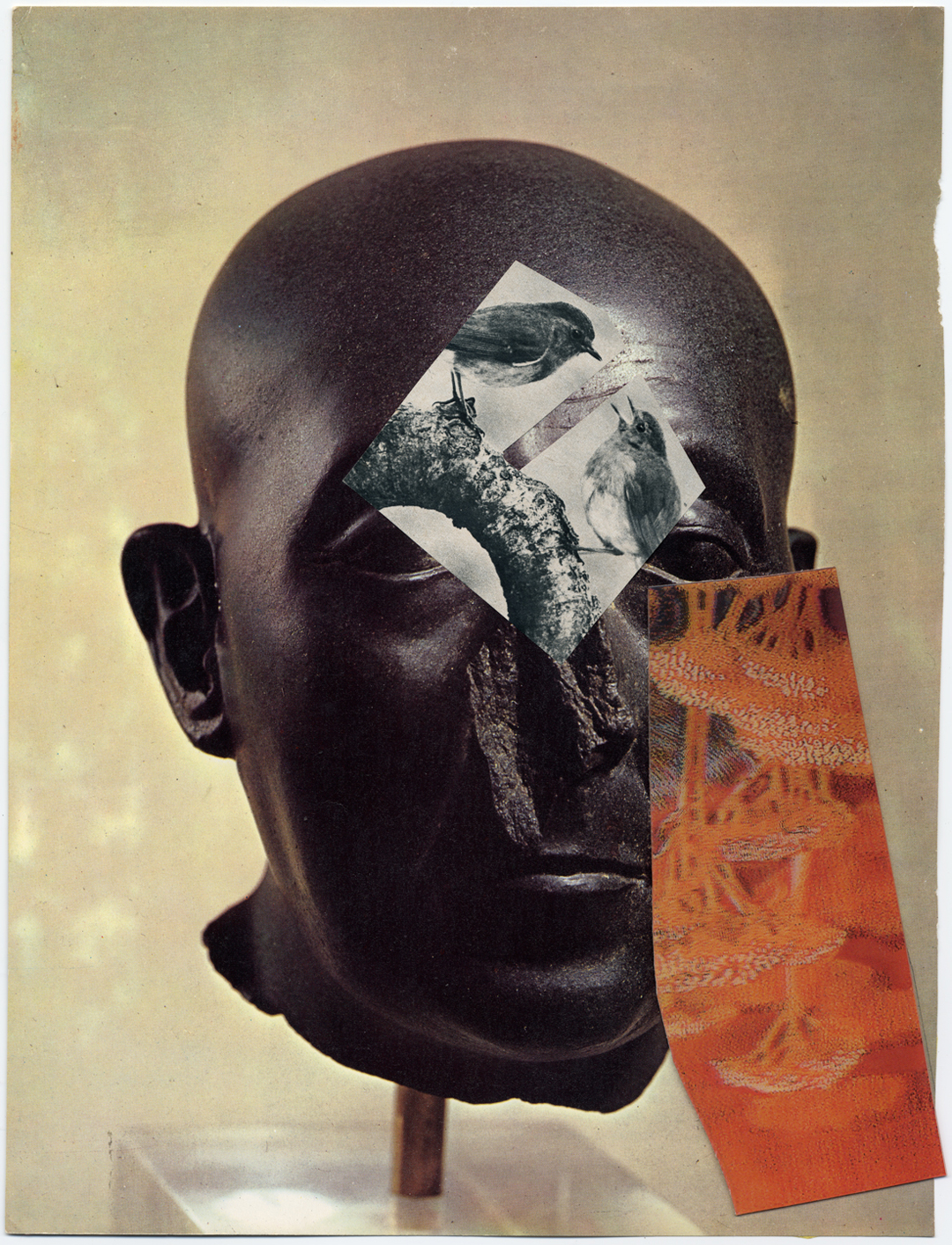
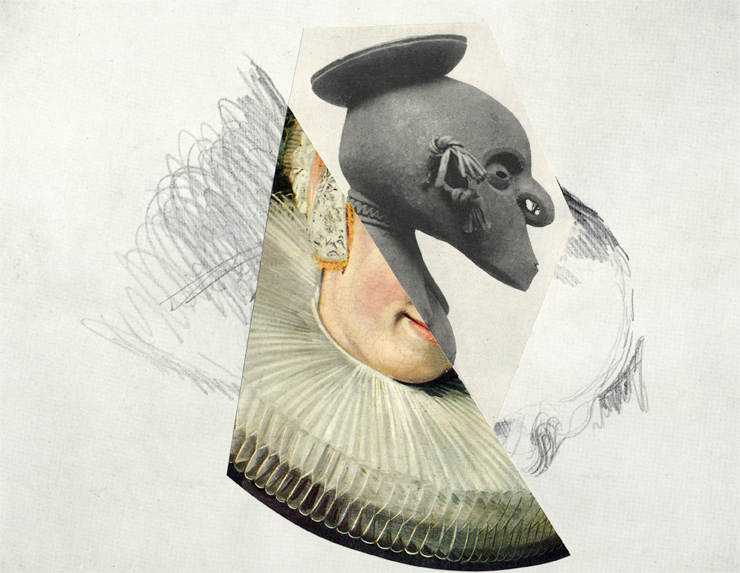
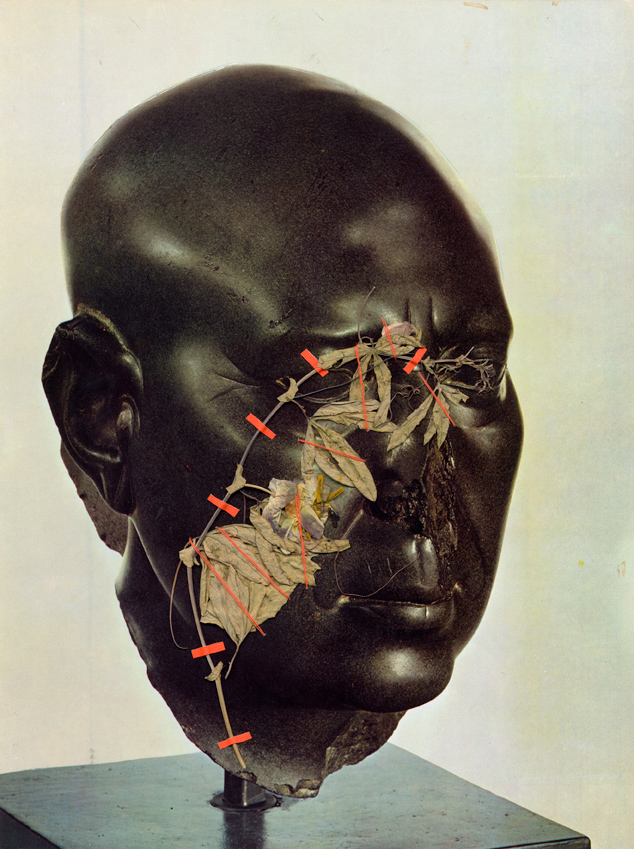
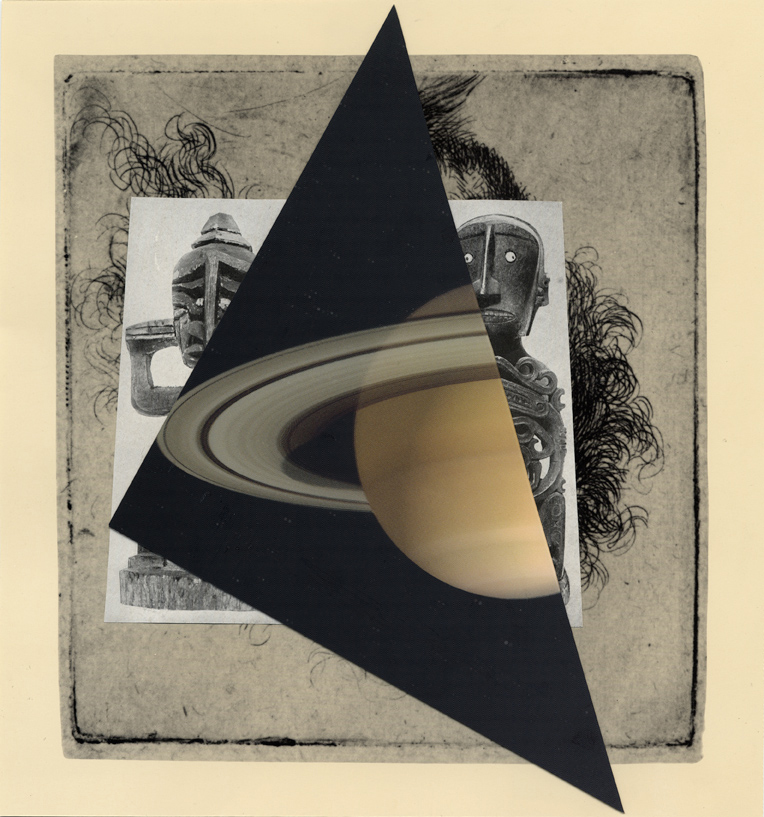
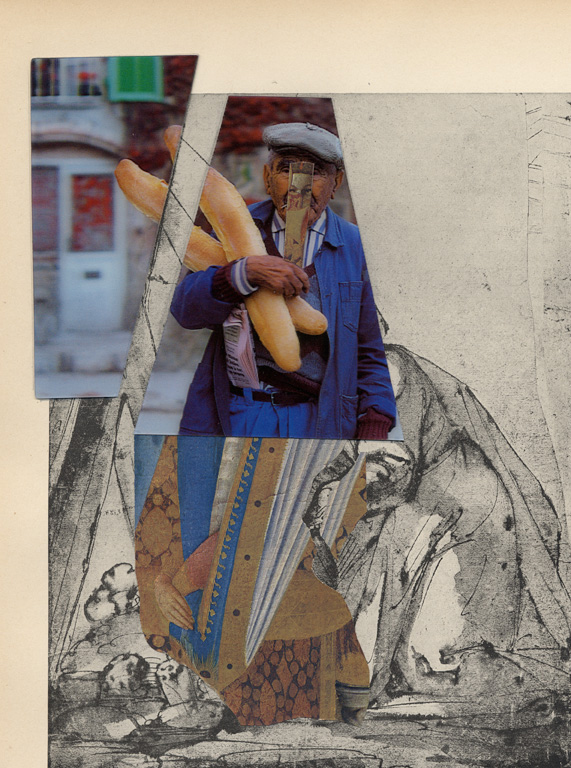
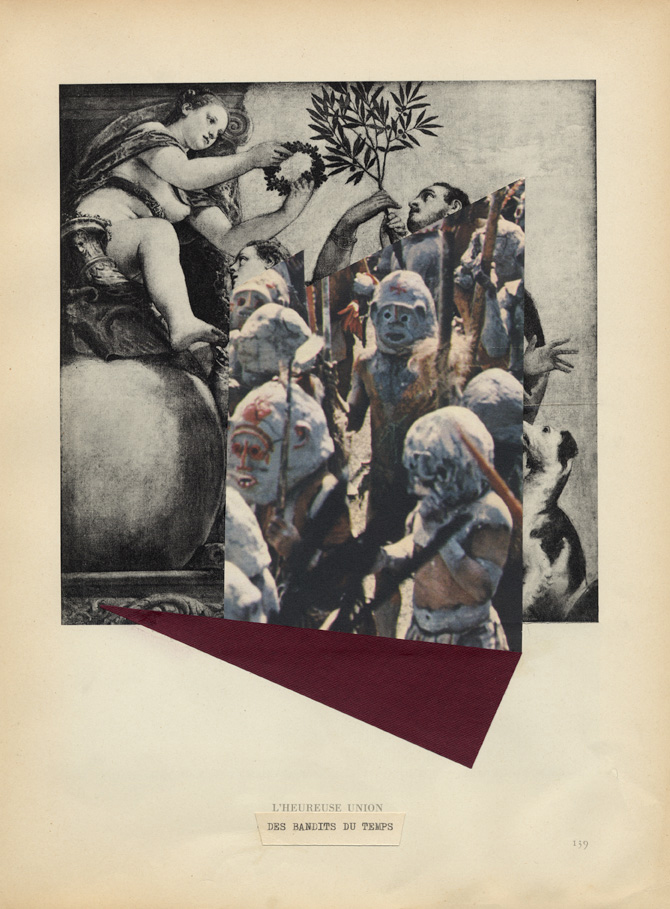
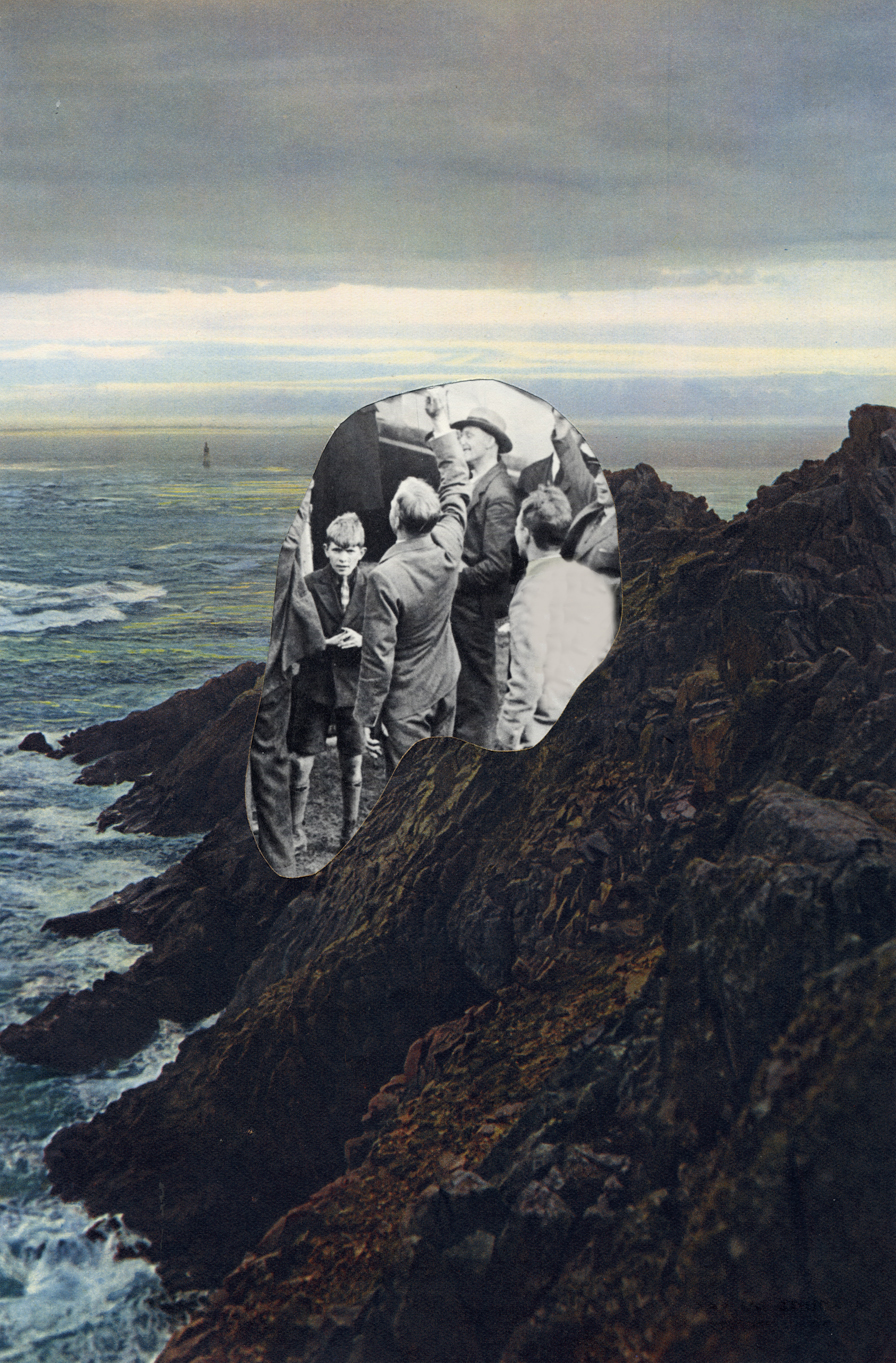
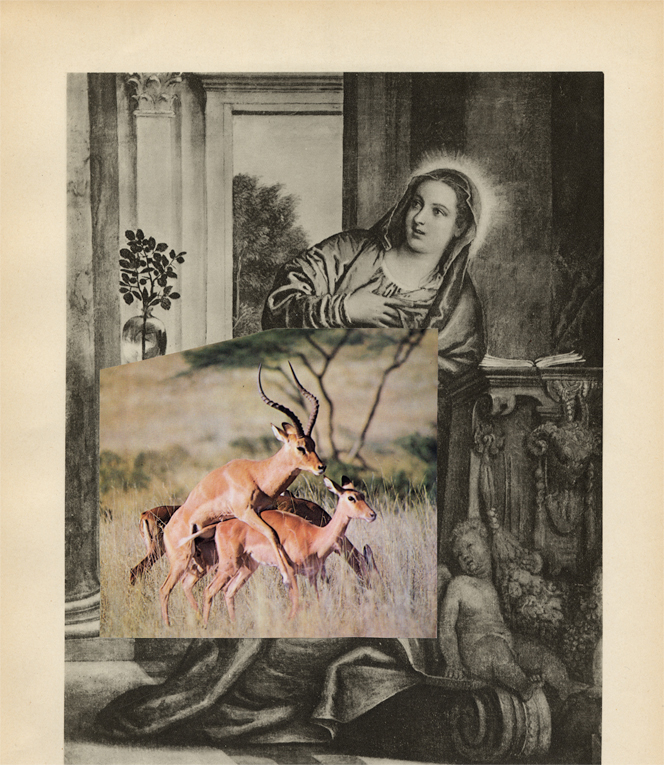
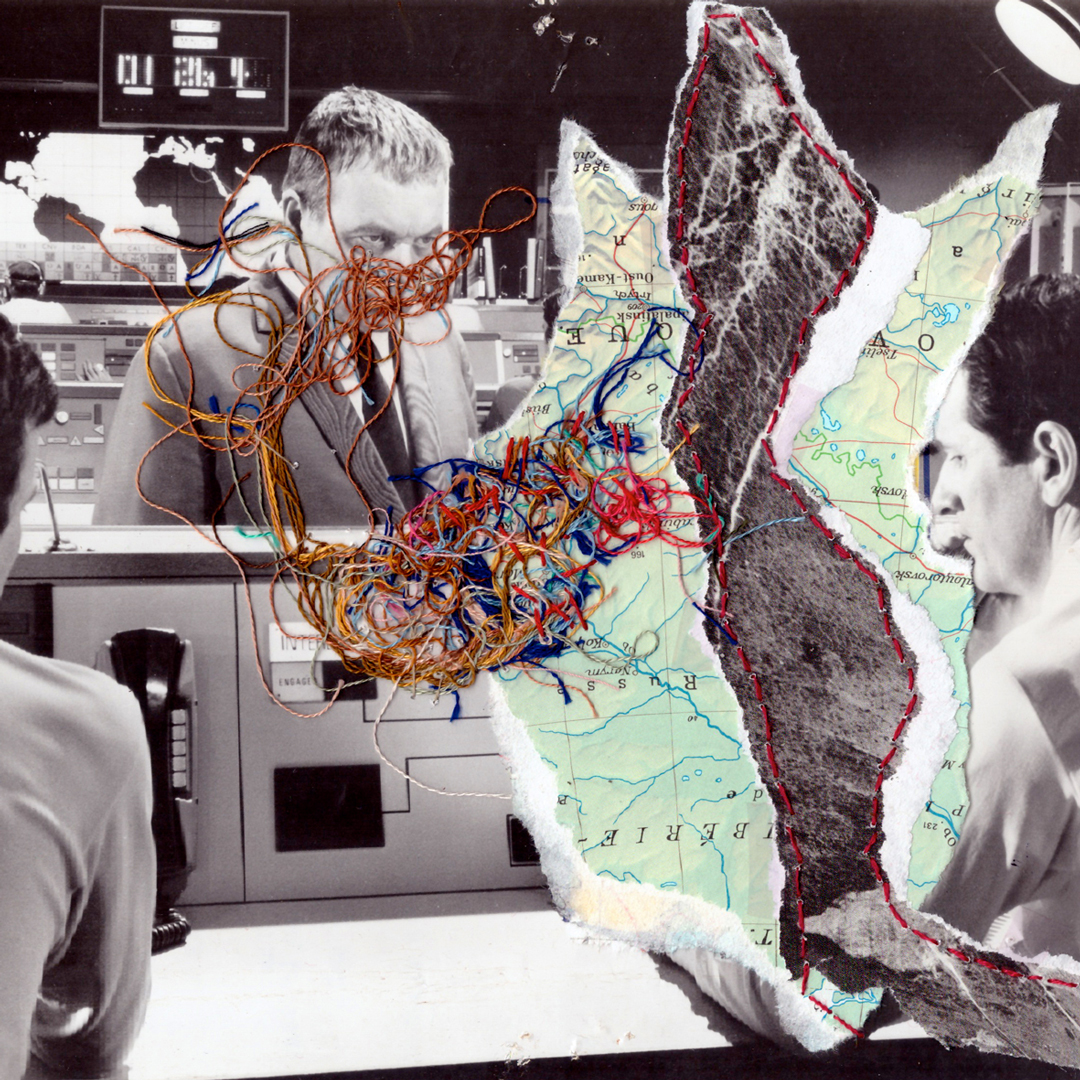
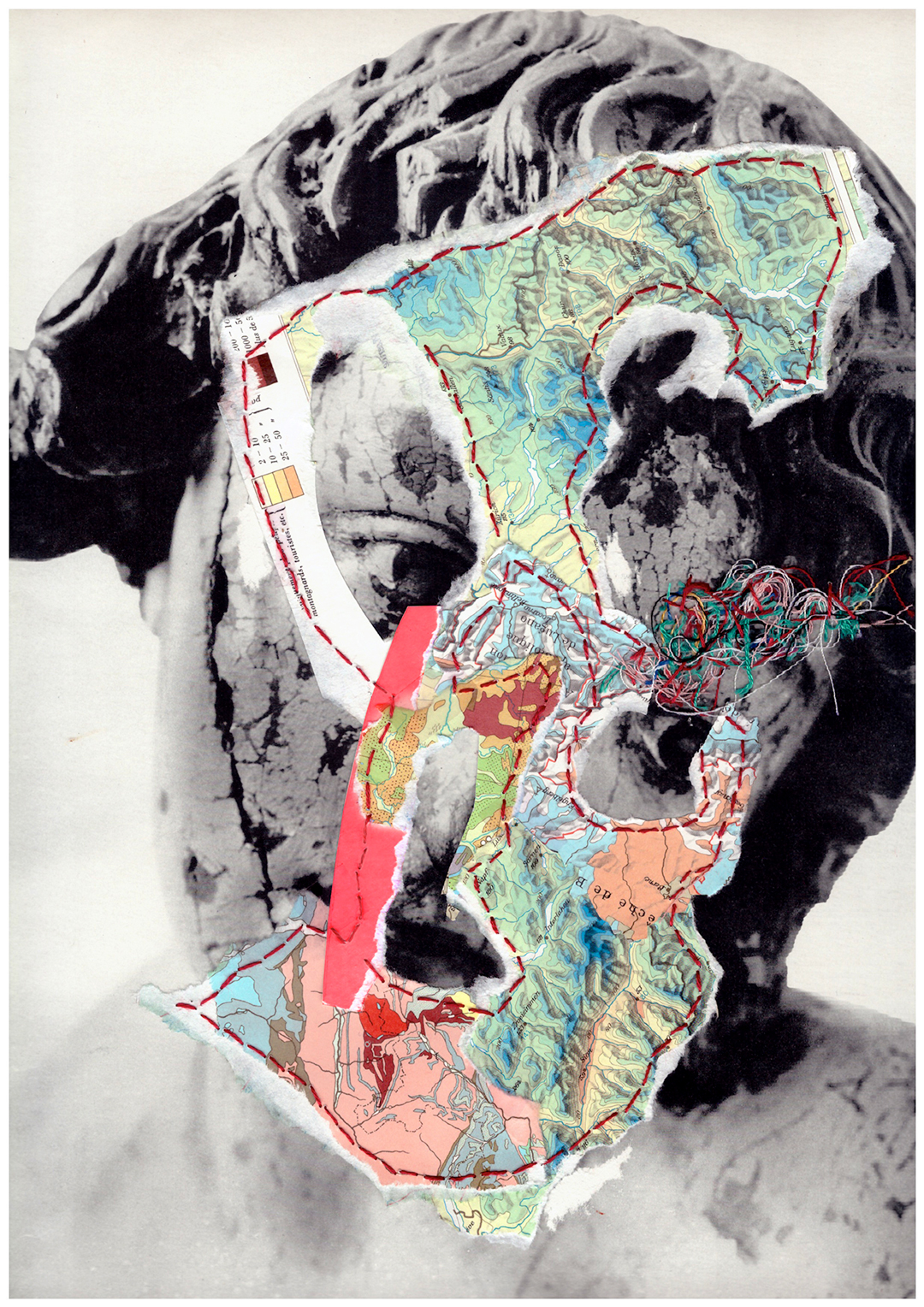
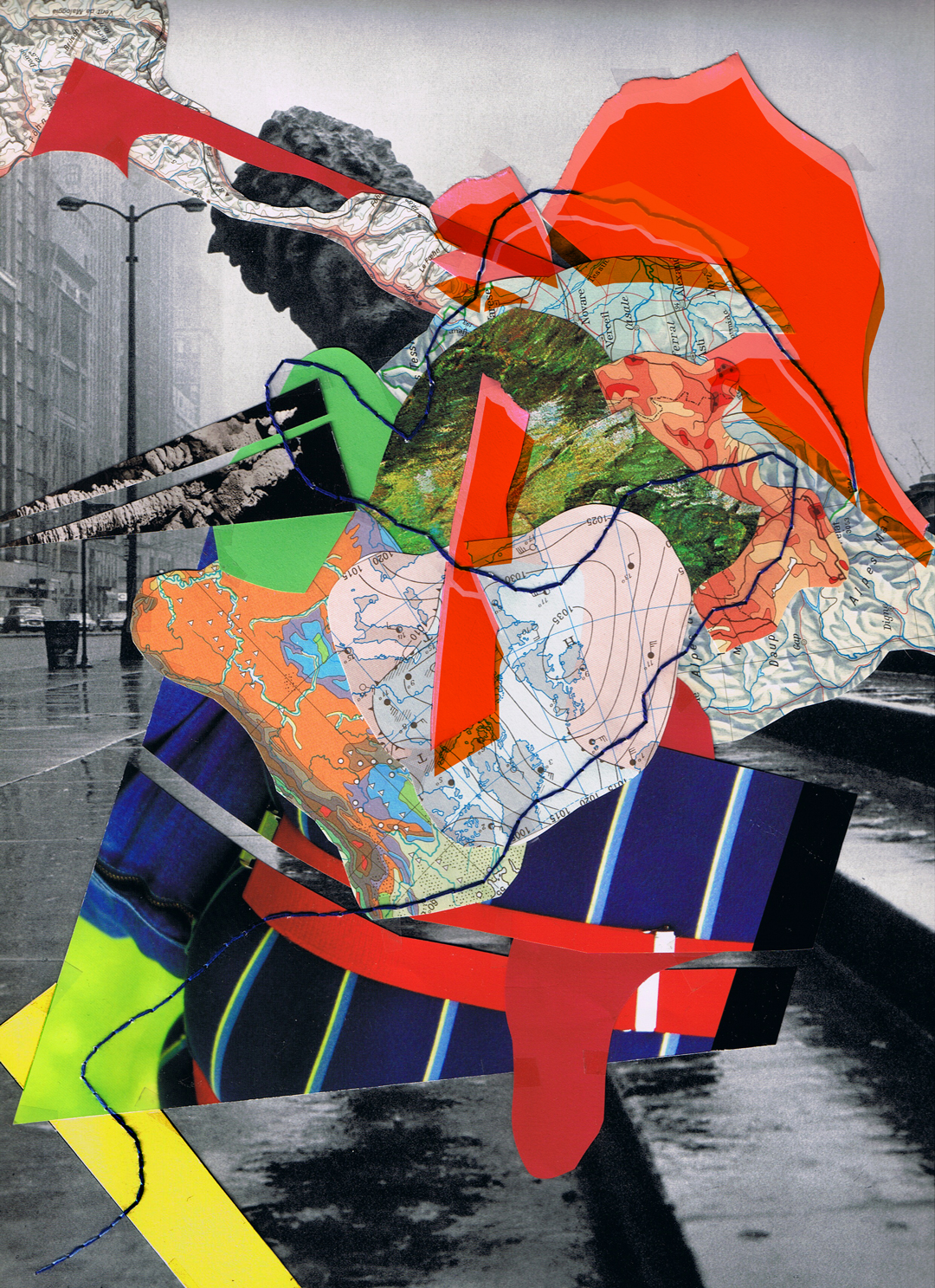
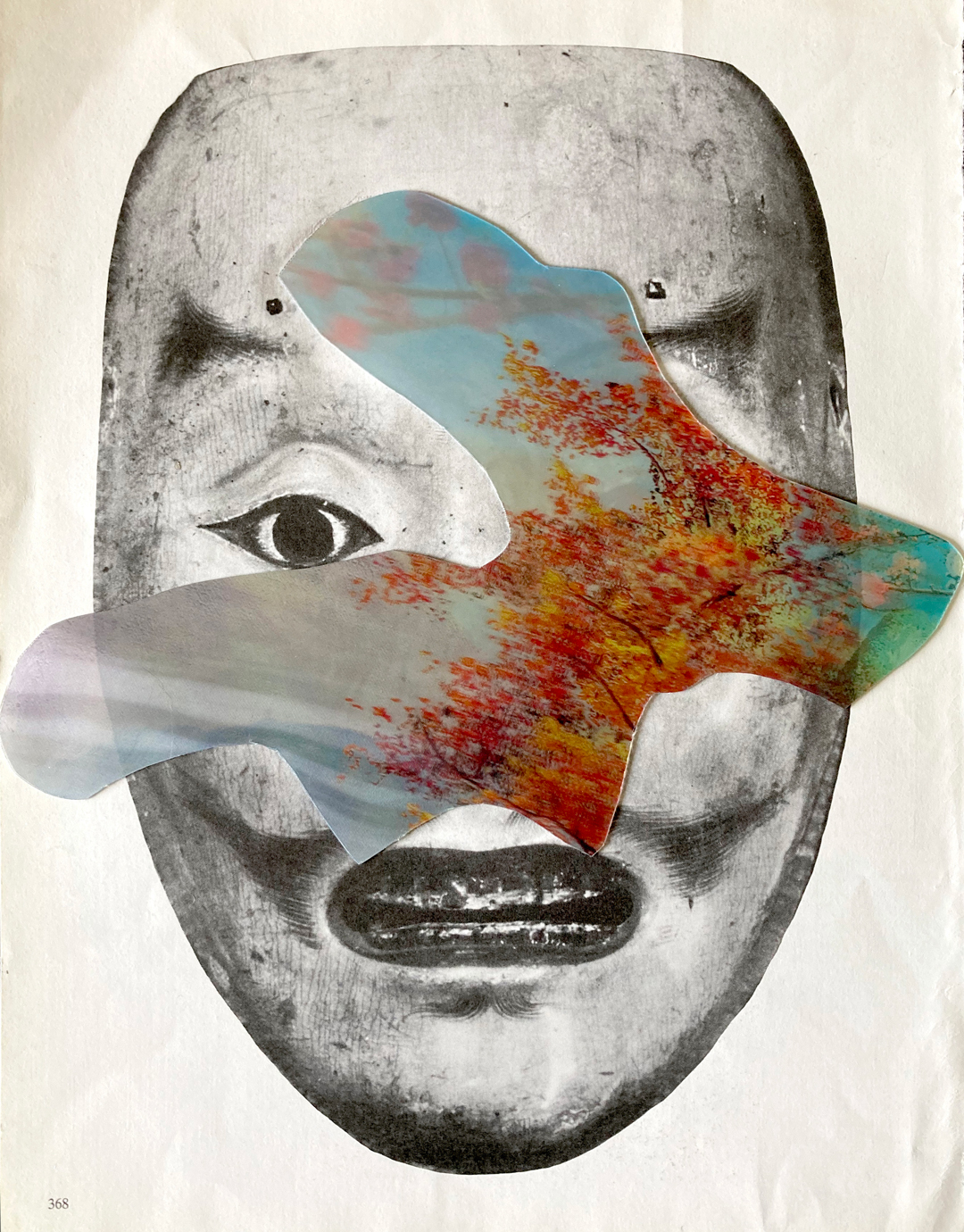
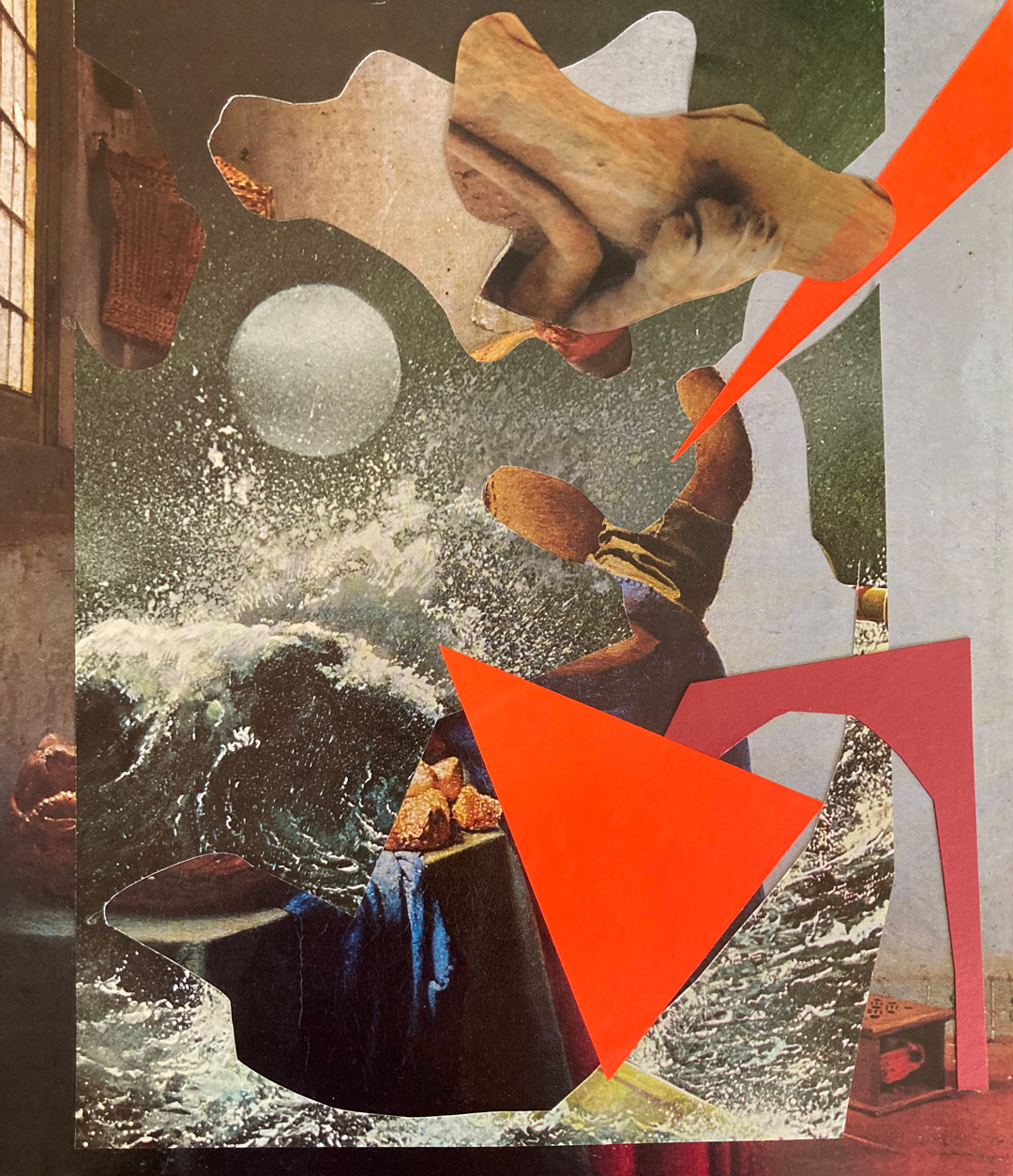
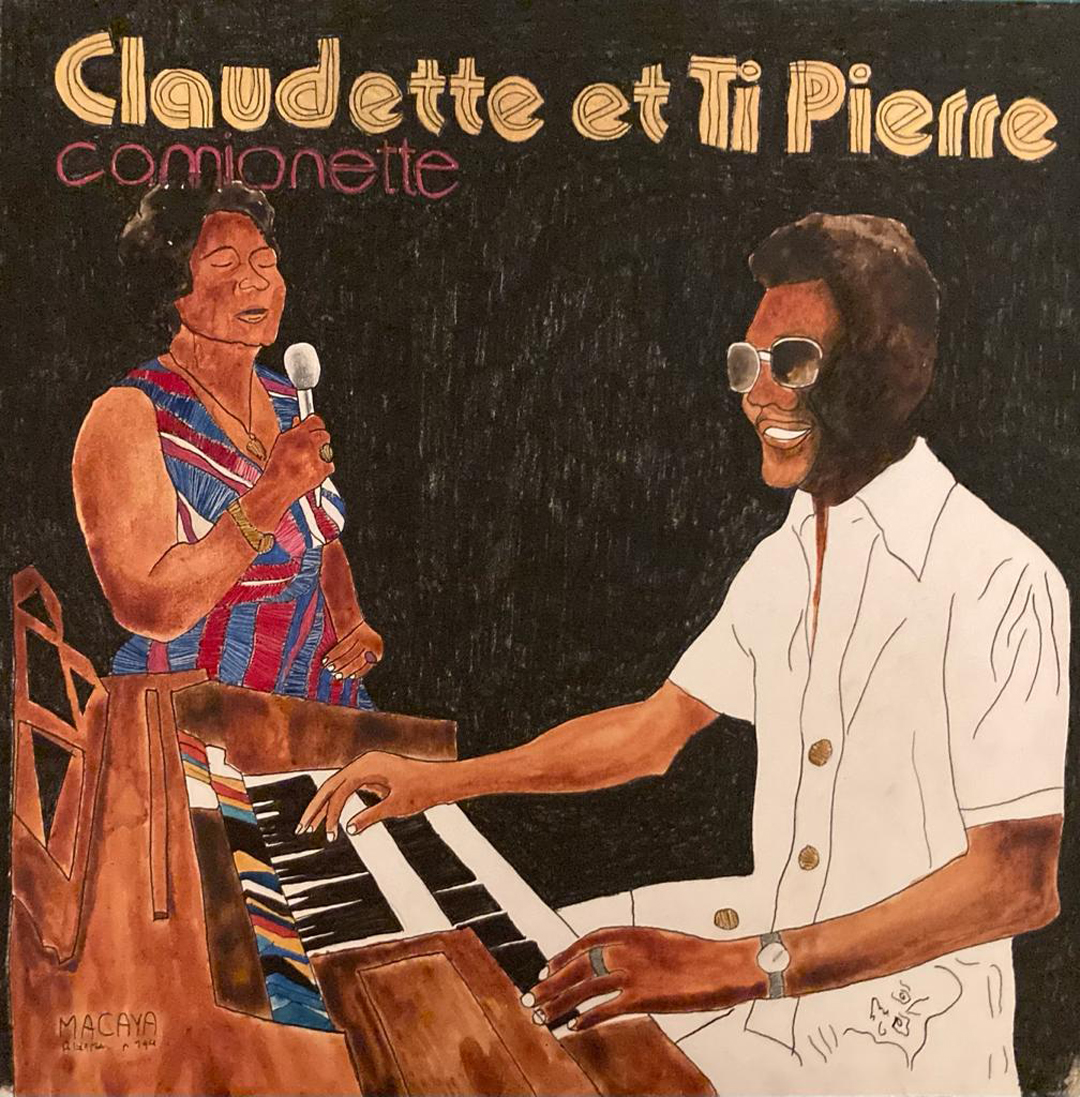
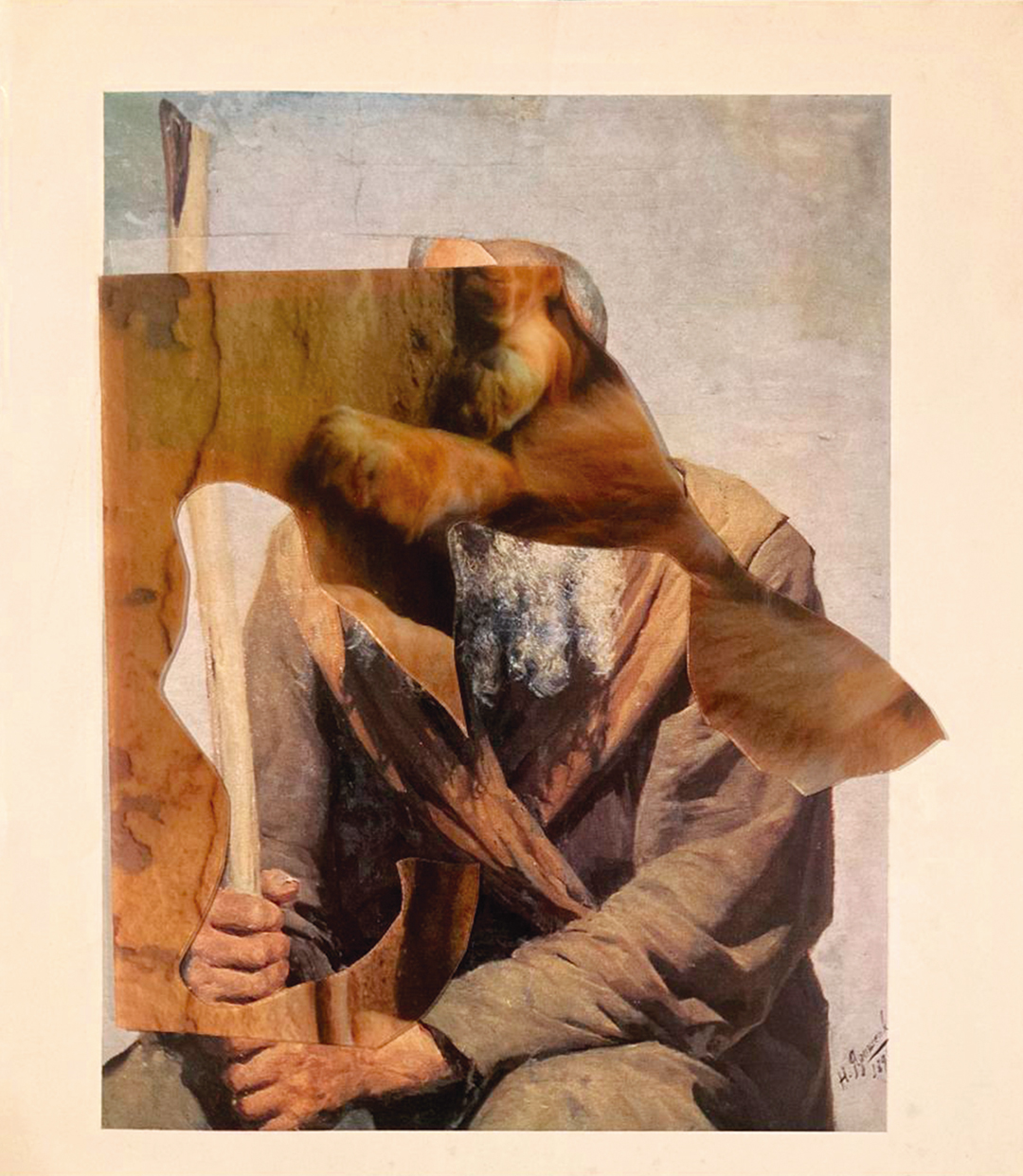
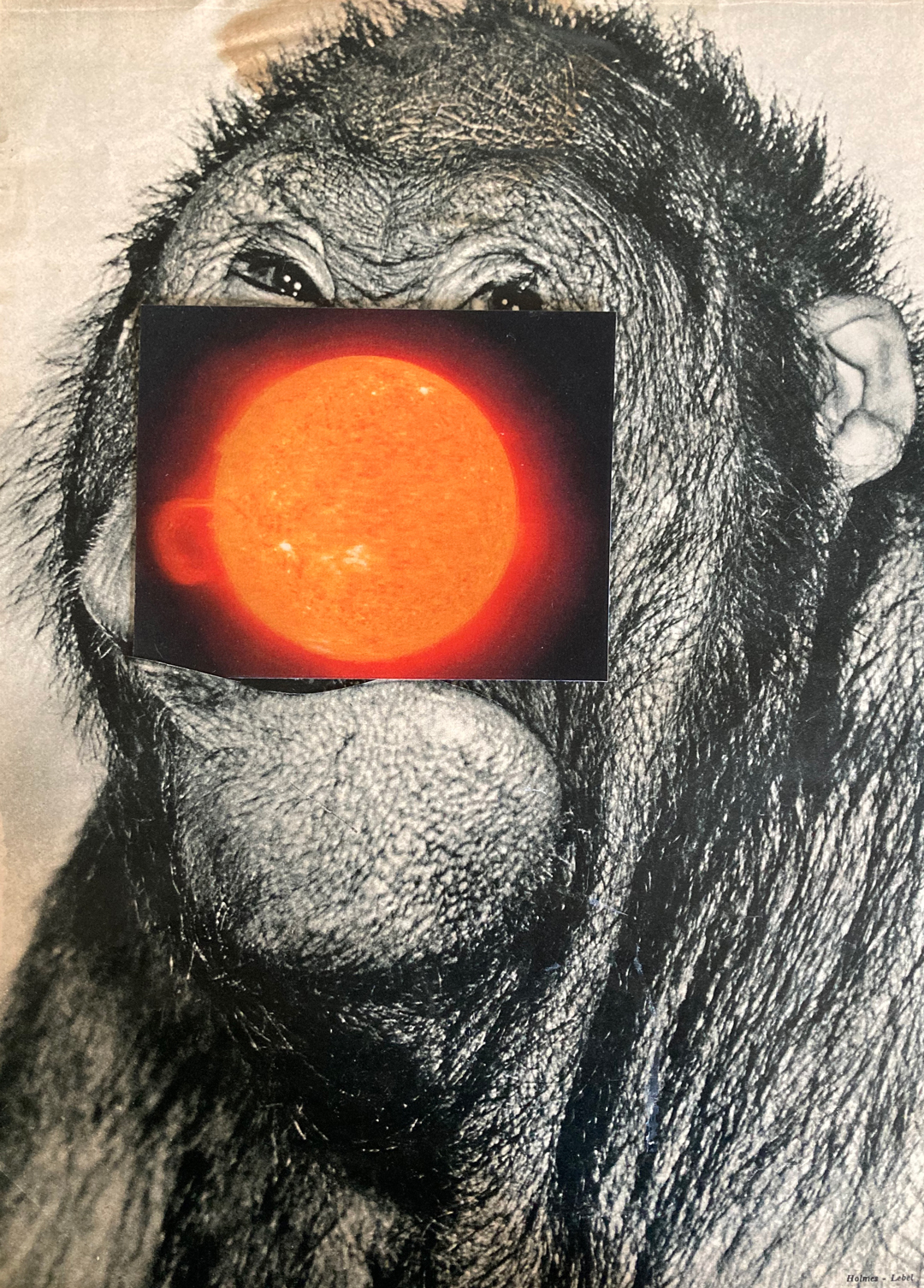
Selección de collages y algunos pocos dibujos realizados entre el año 2019 y el presente.
Esta selección podría llevar el título de una exposición que hice en la galería sometimeStudio, en París, en 2015: «El futuro ya está aquí; simplemente no está distribuido de manera homogénea», frase de William Gibson. El texto que sigue fue escrito entonces, para esa exposición. Ahora vuelve a aparecer aquí, varios años después, junto a imágenes que todavía no existían.
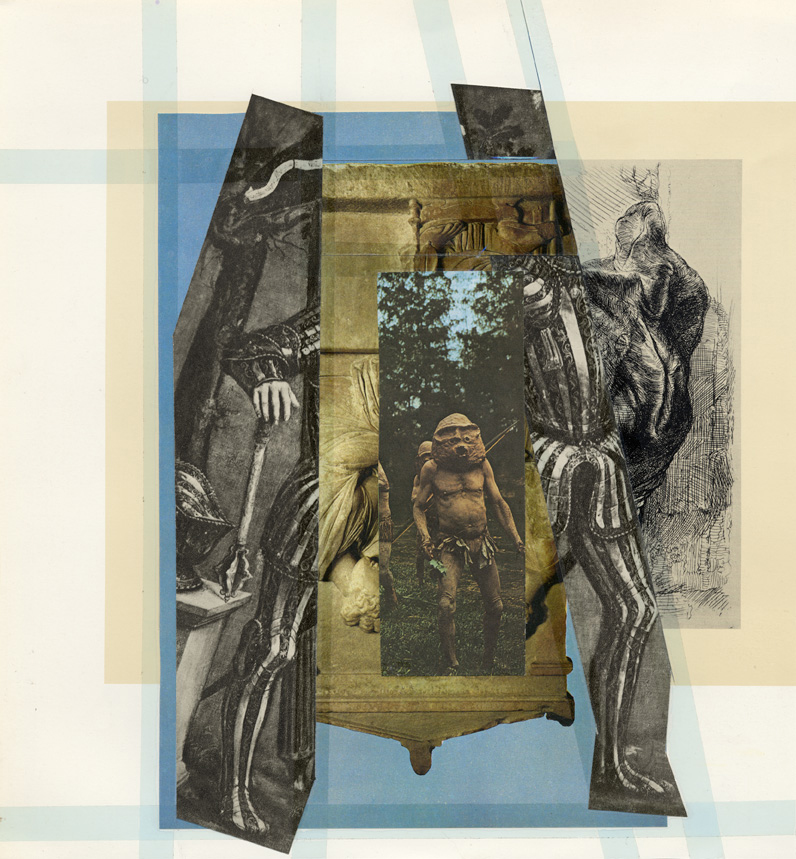
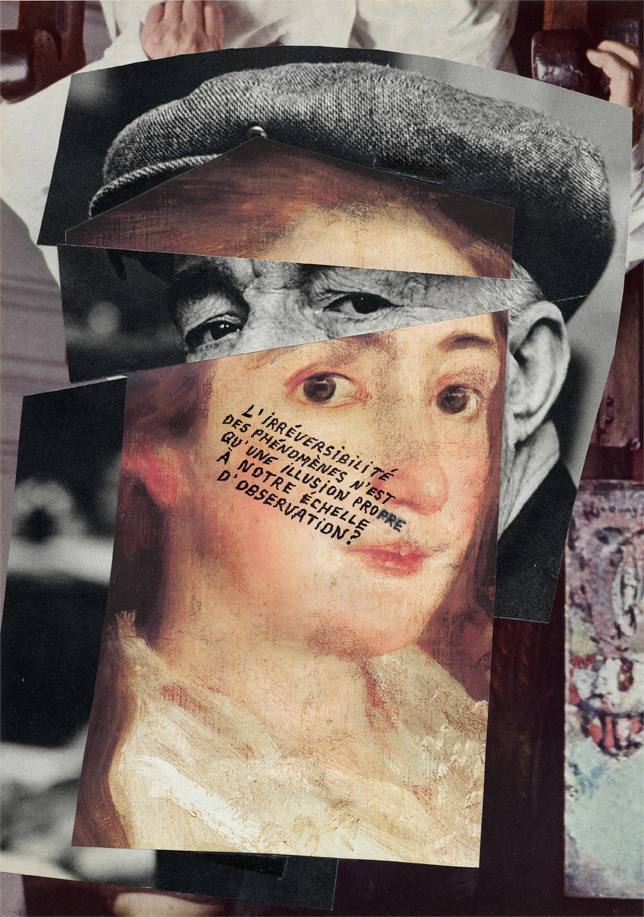
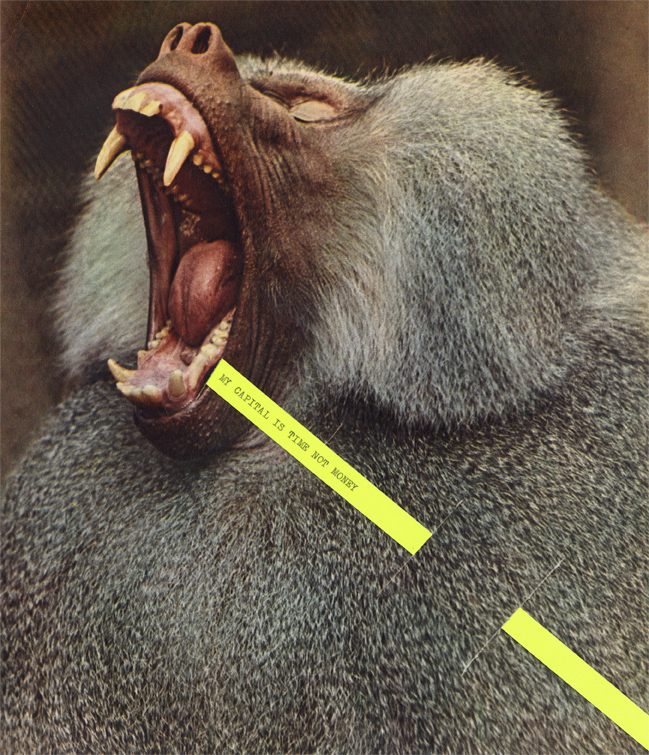
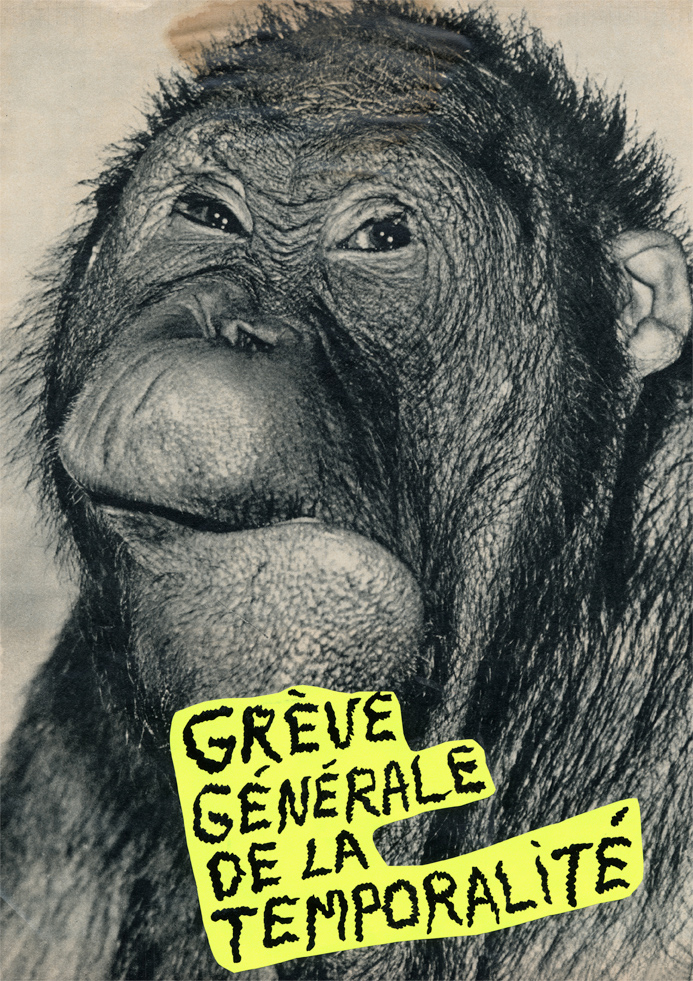
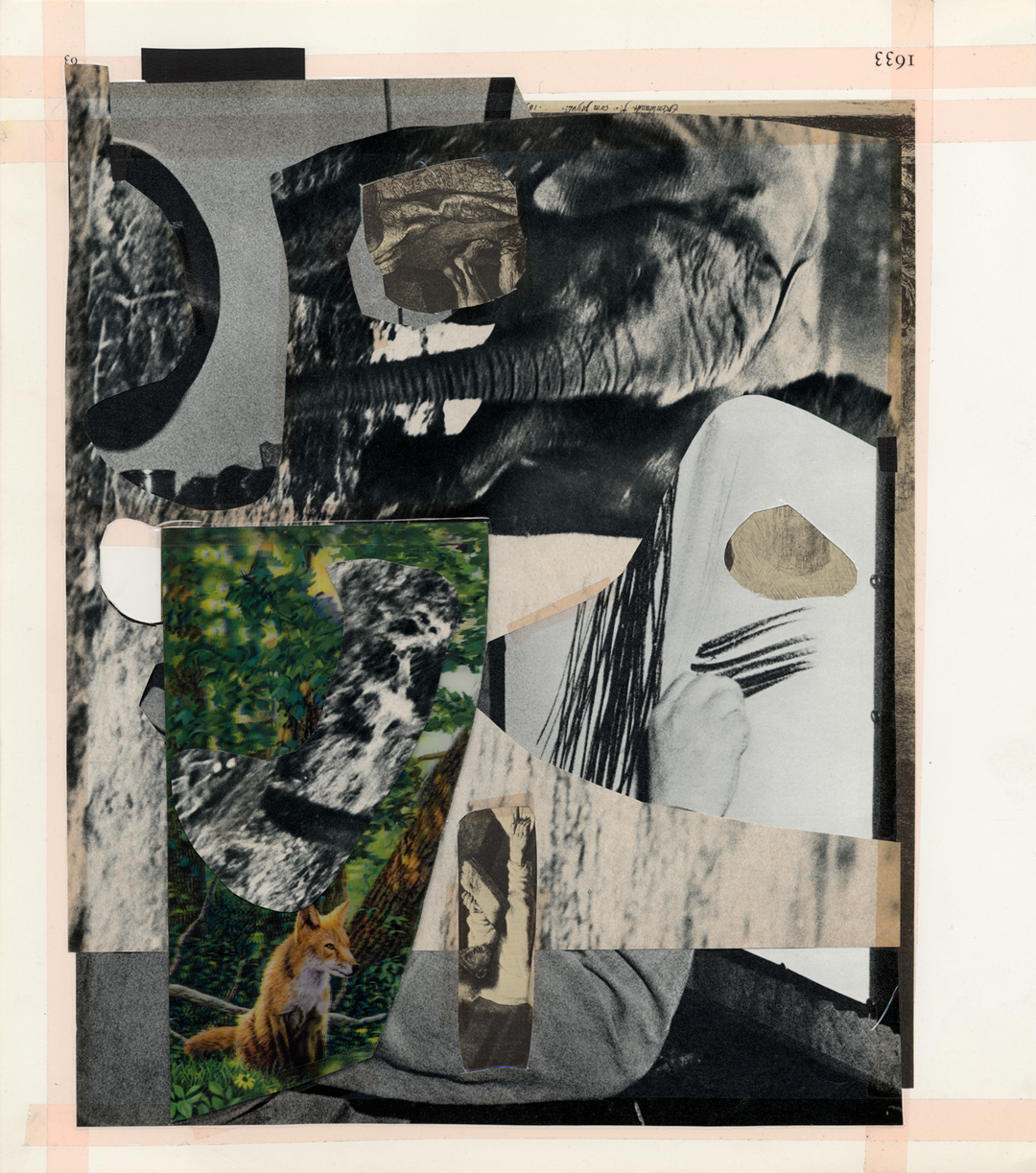
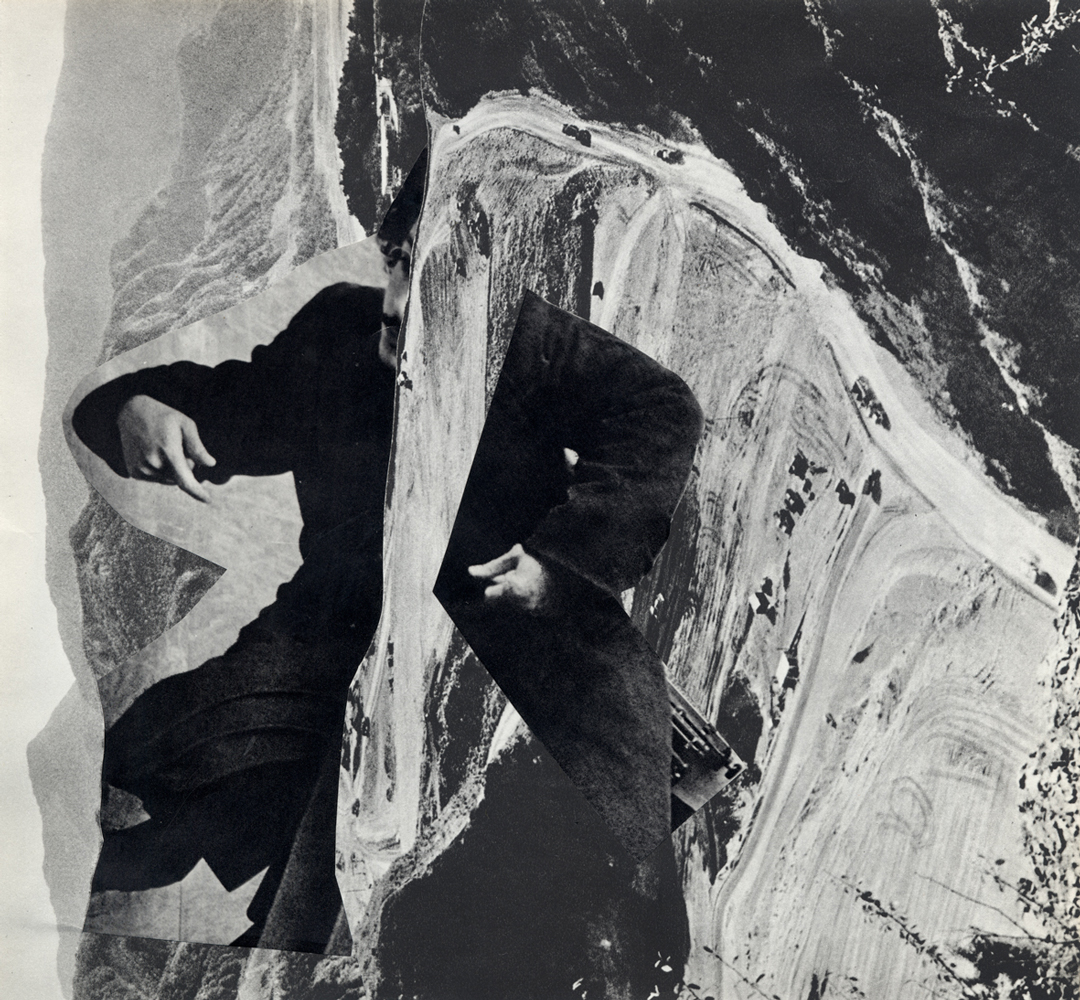
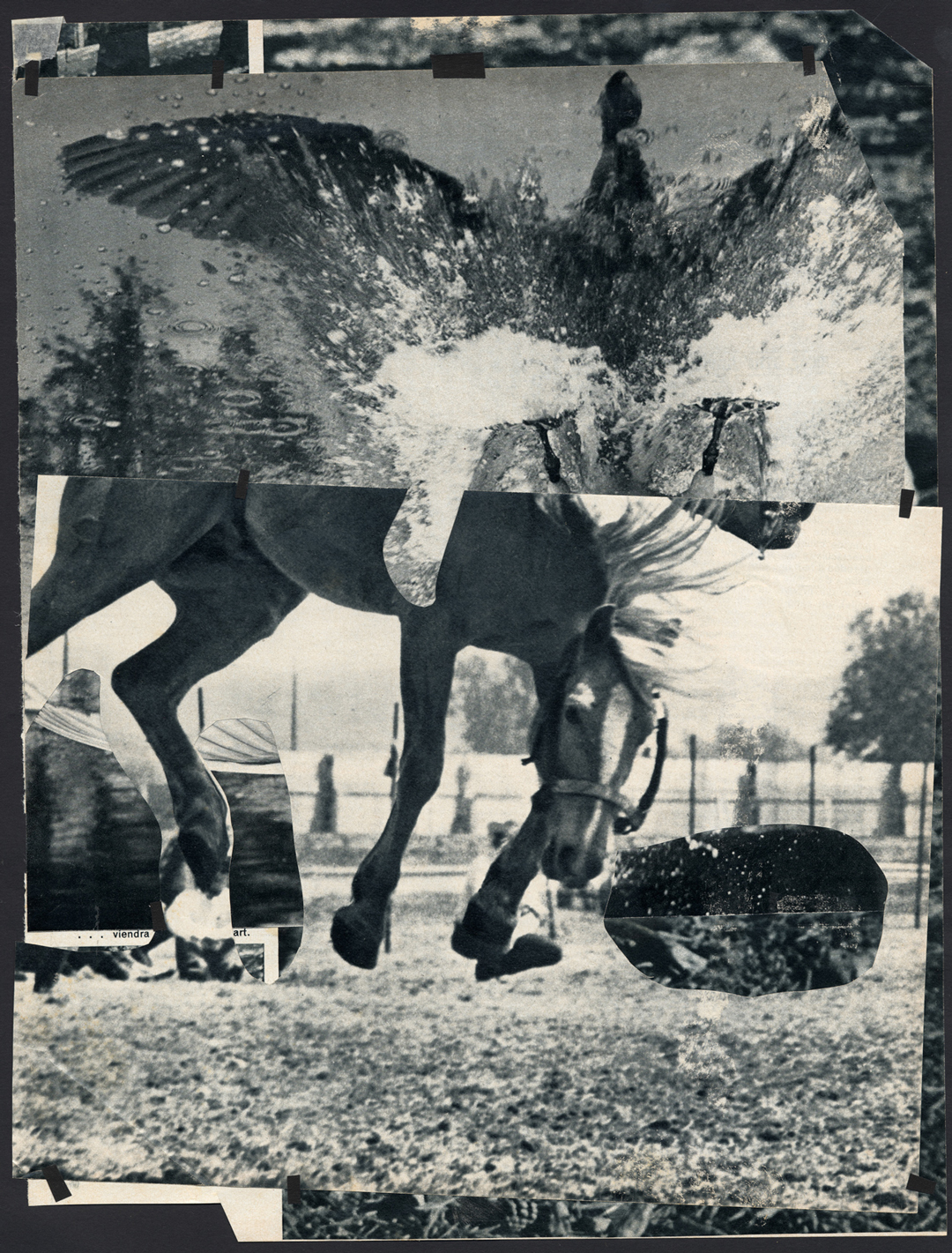
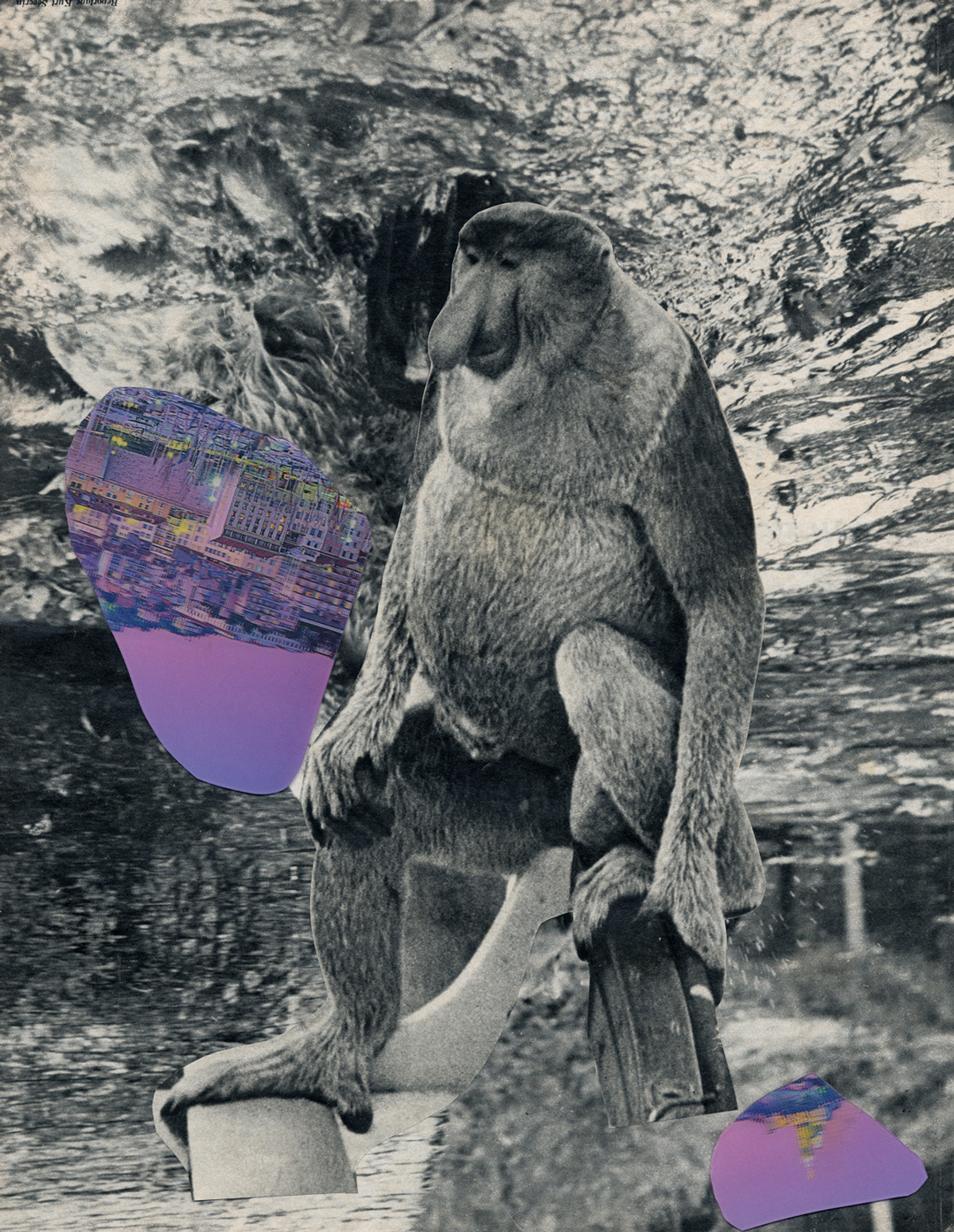
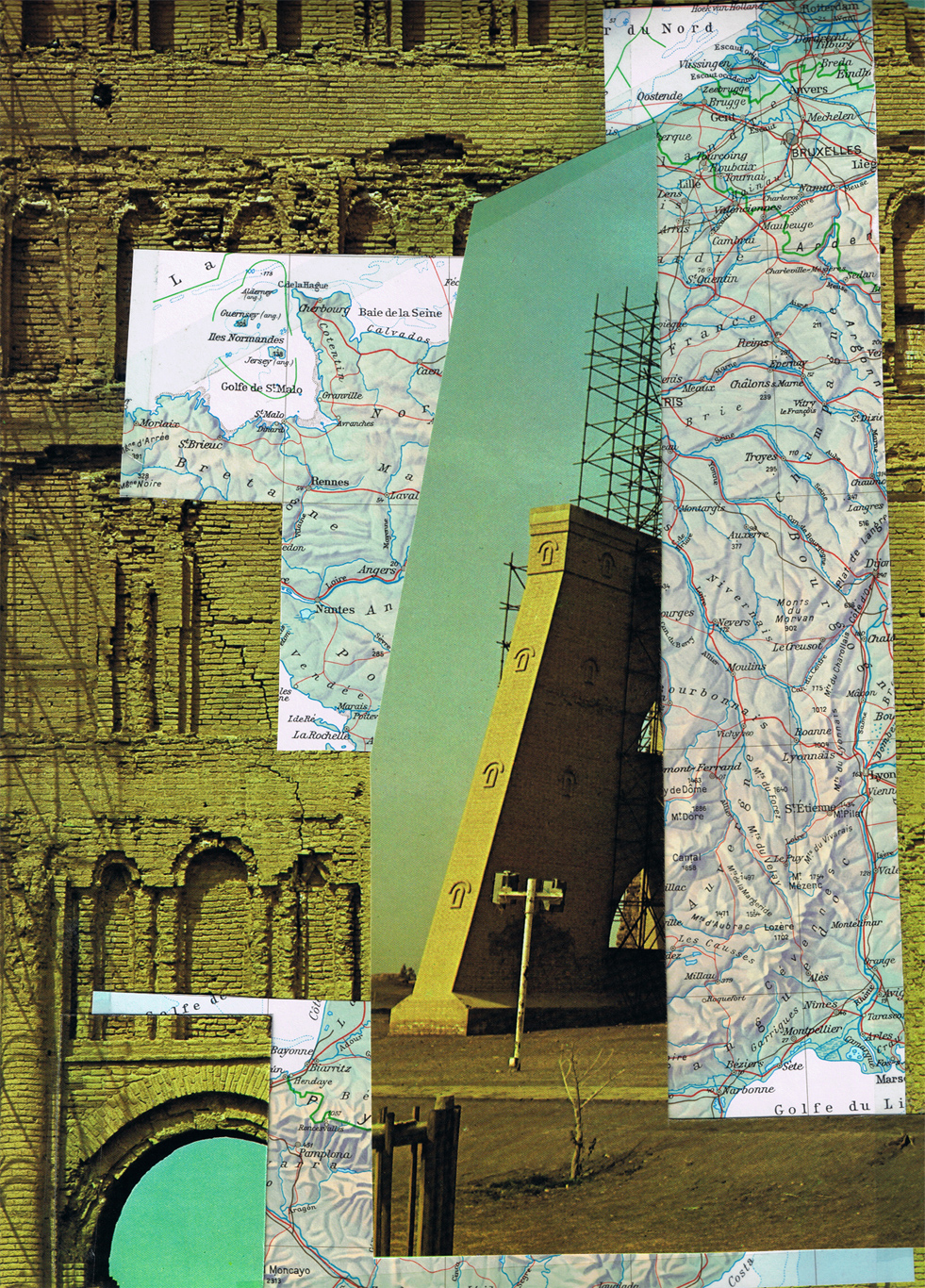
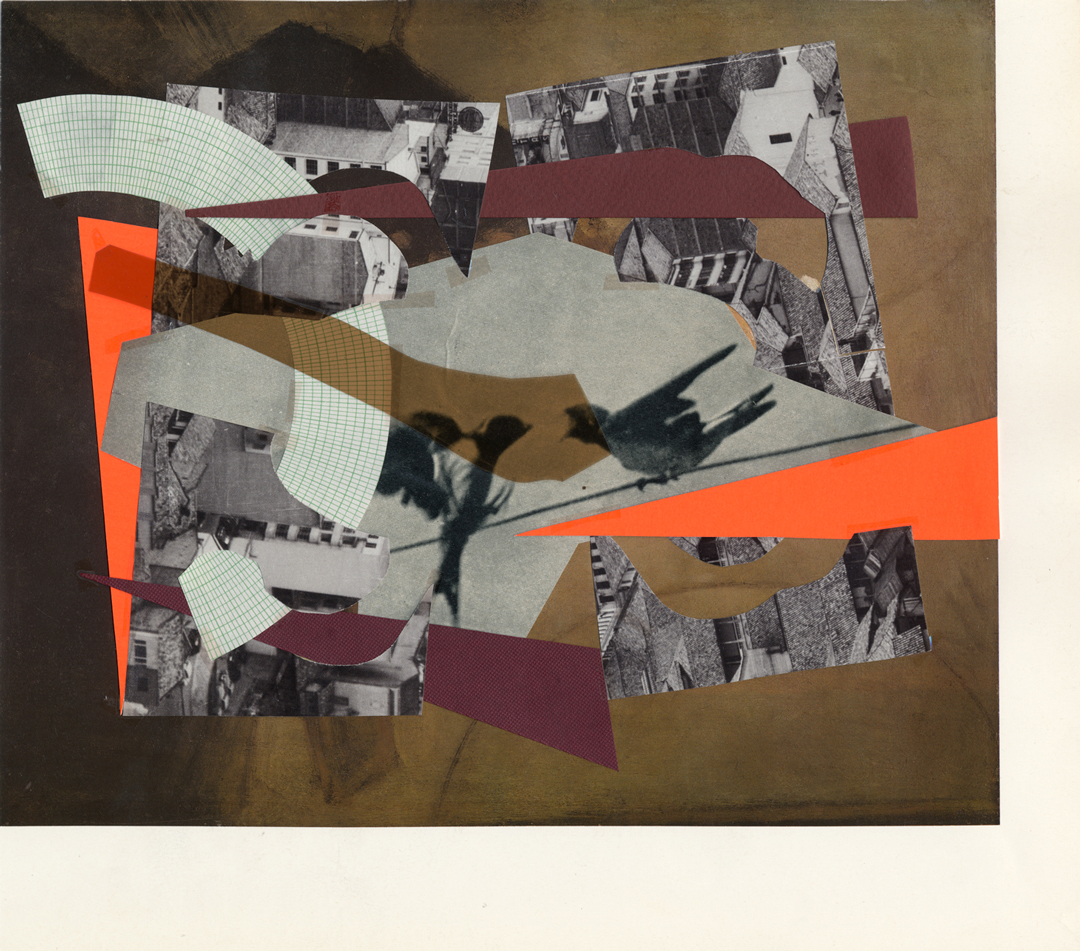
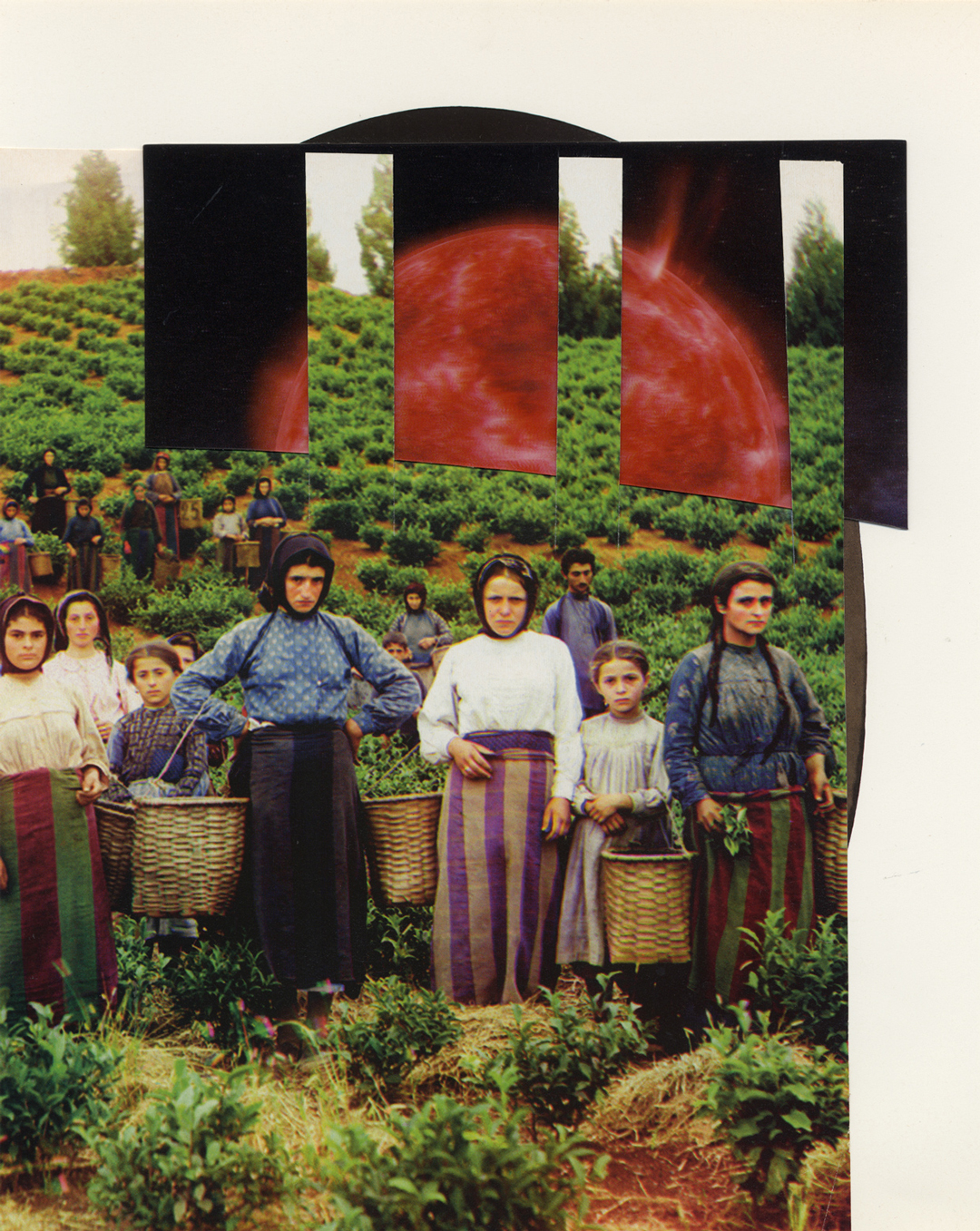
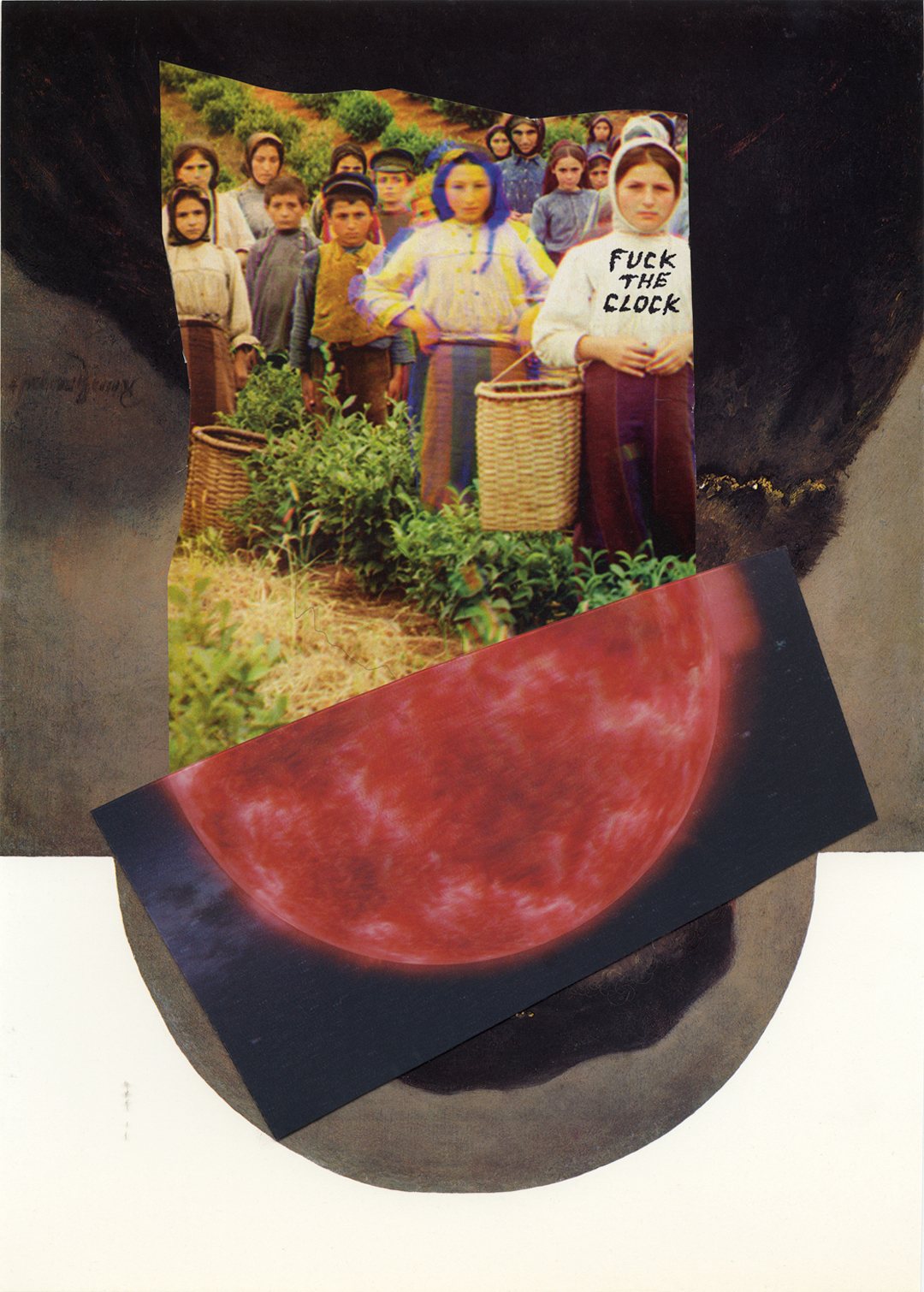
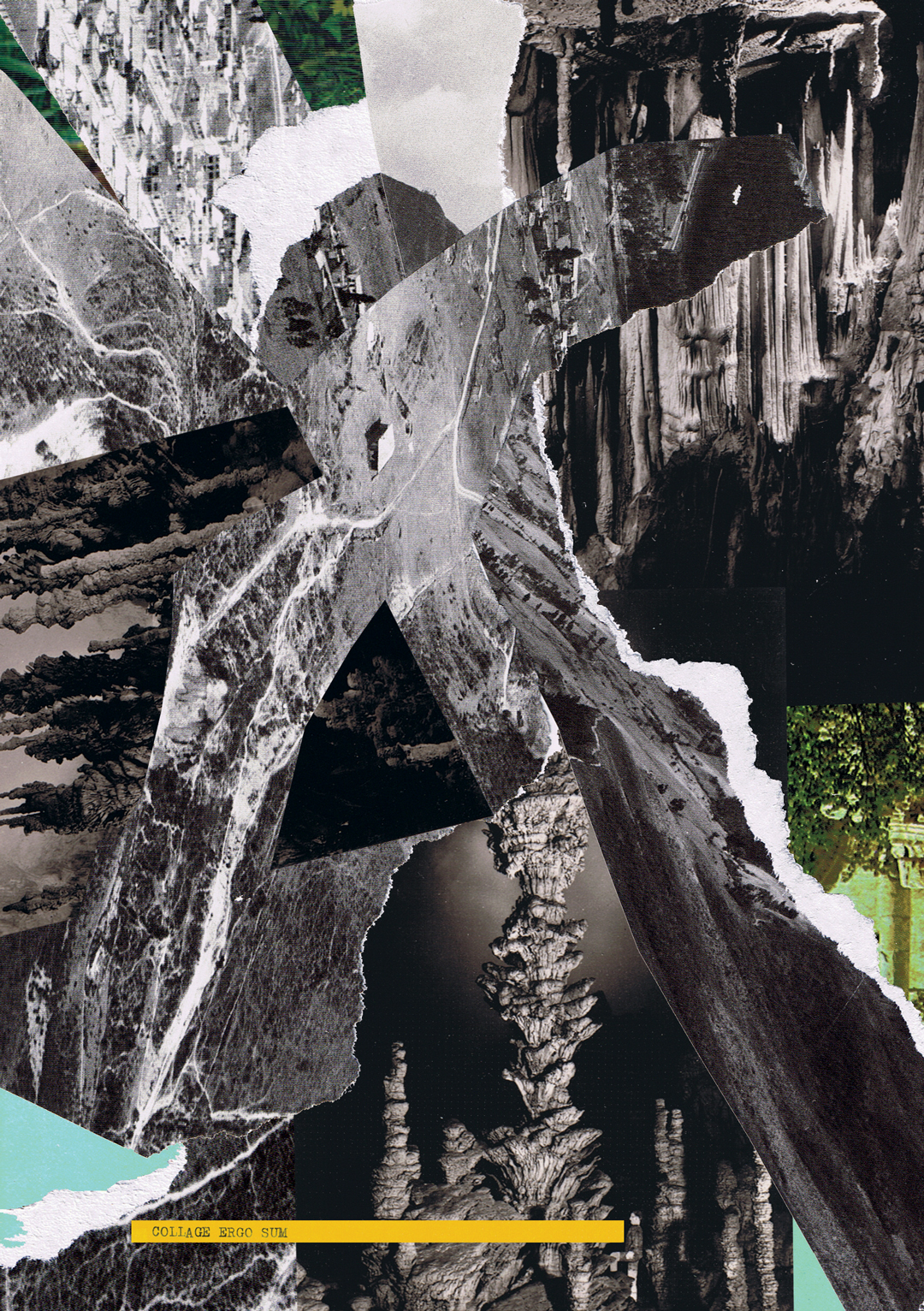
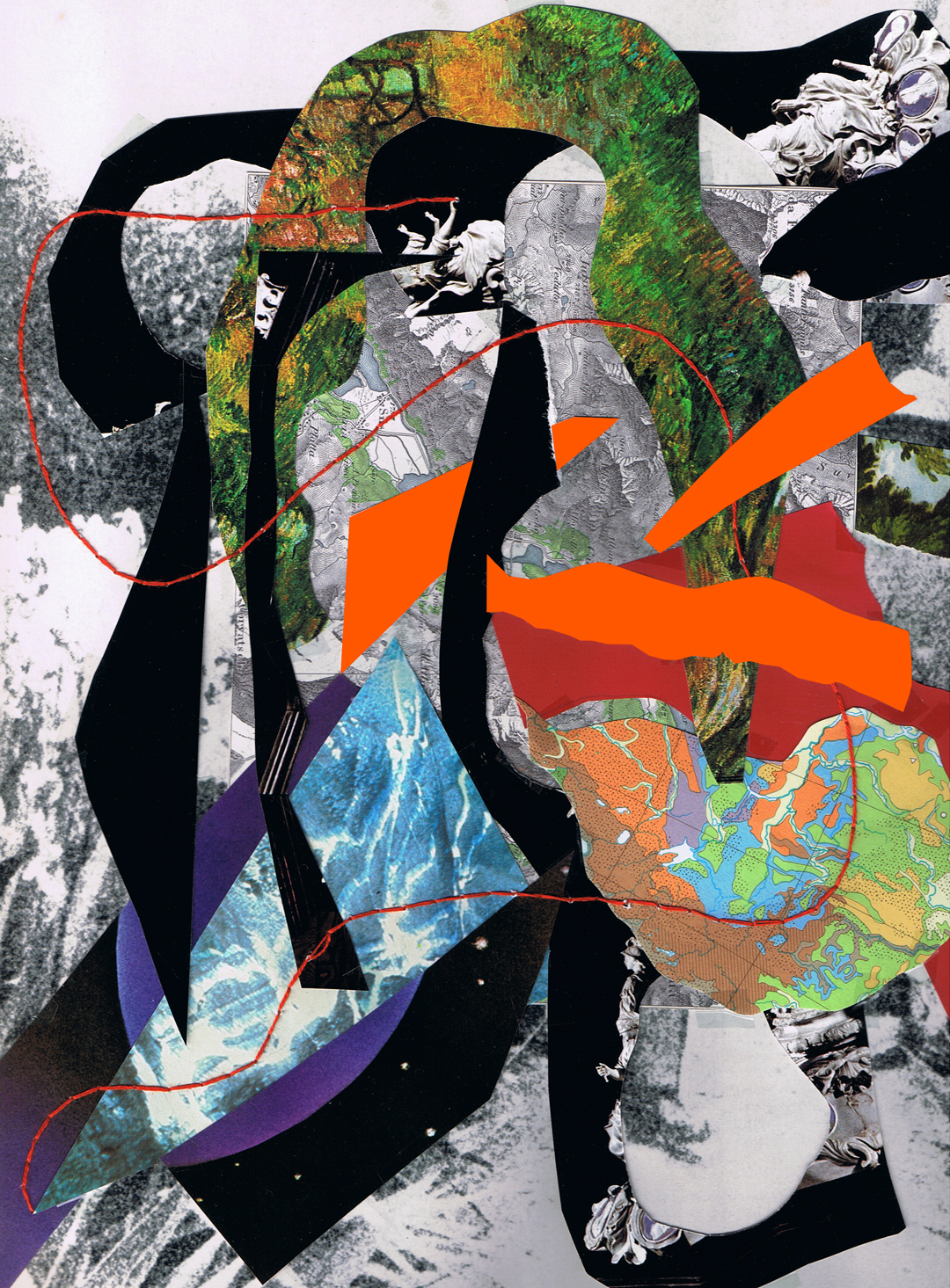
Hay imágenes que viajan a través de espacios y tiempos heterogéneos y pueden encontrarse en un sustrato común. De repente, una imagen llega y le dice a otra: «ven a jugar conmigo», o «hagamos el amor», o «mejor démonos en la jeta con las patas de nuestras mesas» (Gustave Flaubert). Y cuando dos, o varias, o una infinidad de imágenes juegan juntas, podríamos llamar a eso un collage. En el collage todos estos tiempos, estos espacios, todas estas capas de imágenes se conjugan en una gramática común. Se despliega un lenguaje inédito. Es un lenguaje que puede, por ejemplo, aullar, o que puede cantar, o maullar; es decir, es un lenguaje que engendra una gramática un poco animalaria. El sustrato común de estas imágenes y de esta gramática organiza una discordancia inocente. Es como si el desorden que reúne estas imágenes las utilizara para descubrir un orden totalmente ineficaz, inútil, si se quiere, pero que, al mismo tiempo, se convierte en un orden deliberado, obstinado, humorísticamente heterogéneo. Entonces, la «novedad» de esta discordancia ingenua lanza una posibilidad dentro de esta gramática.
Esto se aproxima, de alguna manera, a la literatura tralfamadoriana, tal como la describe Kurt Vonnegut en su novela Matadero cinco. Se trata de un ensamblaje de signos que constituyen «un mensaje breve e imperioso, describen una situación, una escena. Los mensajes no están encadenados por ningún vínculo especial, pero el autor los ha elegido cuidadosamente para que, considerados en conjunto, den una imagen de la vida a la vez bella, sorprendente y profunda. No hay principio, ni medio ni fin. No hay suspense, ni moraleja, ni causa ni efecto. Lo que nos seduce en nuestros libros, dice un tralfamadoriano, es el relieve de tantos momentos maravillosos aprehendidos simultáneamente». [De la traducción francesa: Kurt Vonnegut, MATADERO 5 o la cruzada de los niños, traducción del inglés de Lucienne Lotringer, París, Éditions du Seuil, 1971, p. 82.]
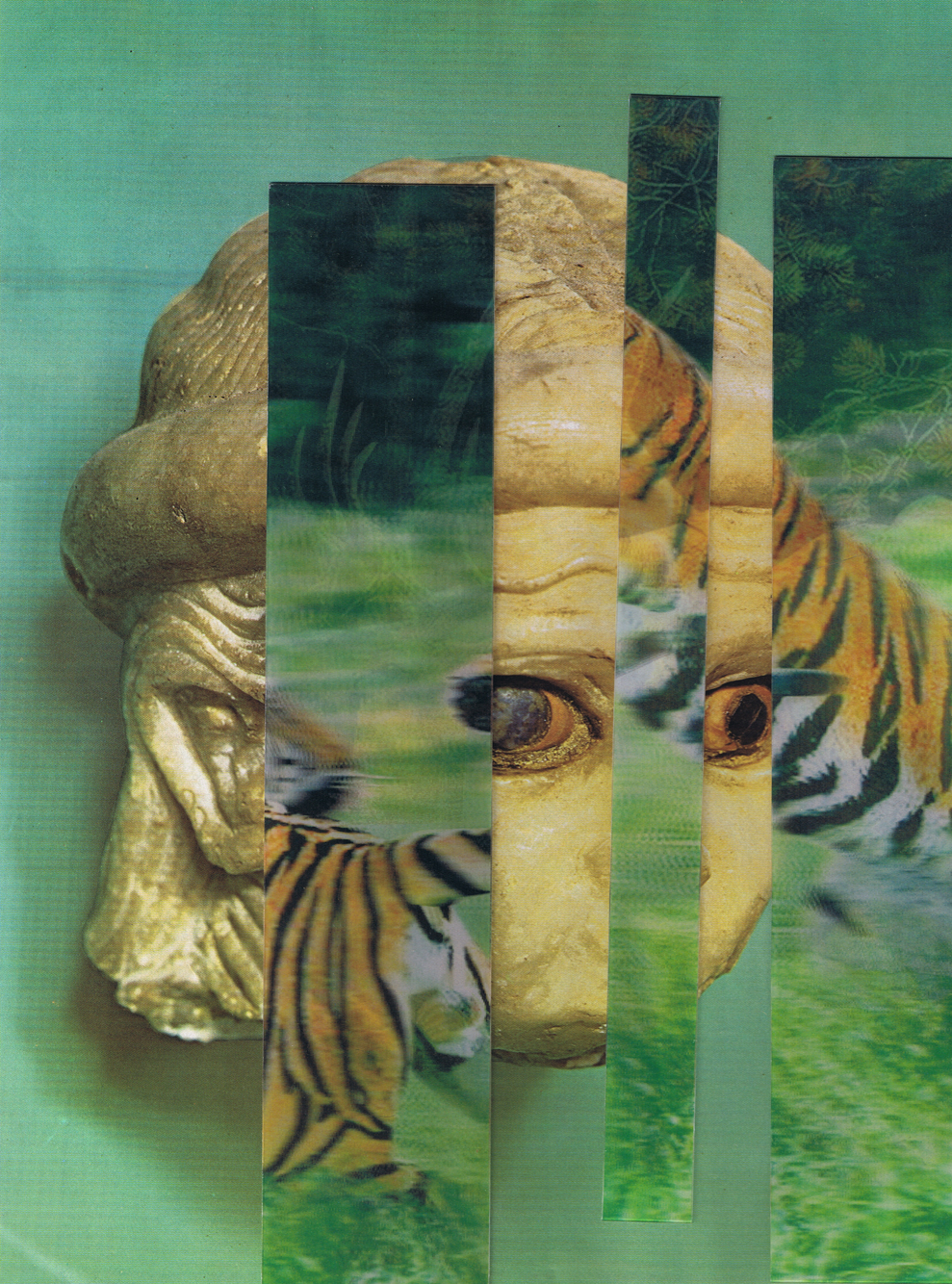
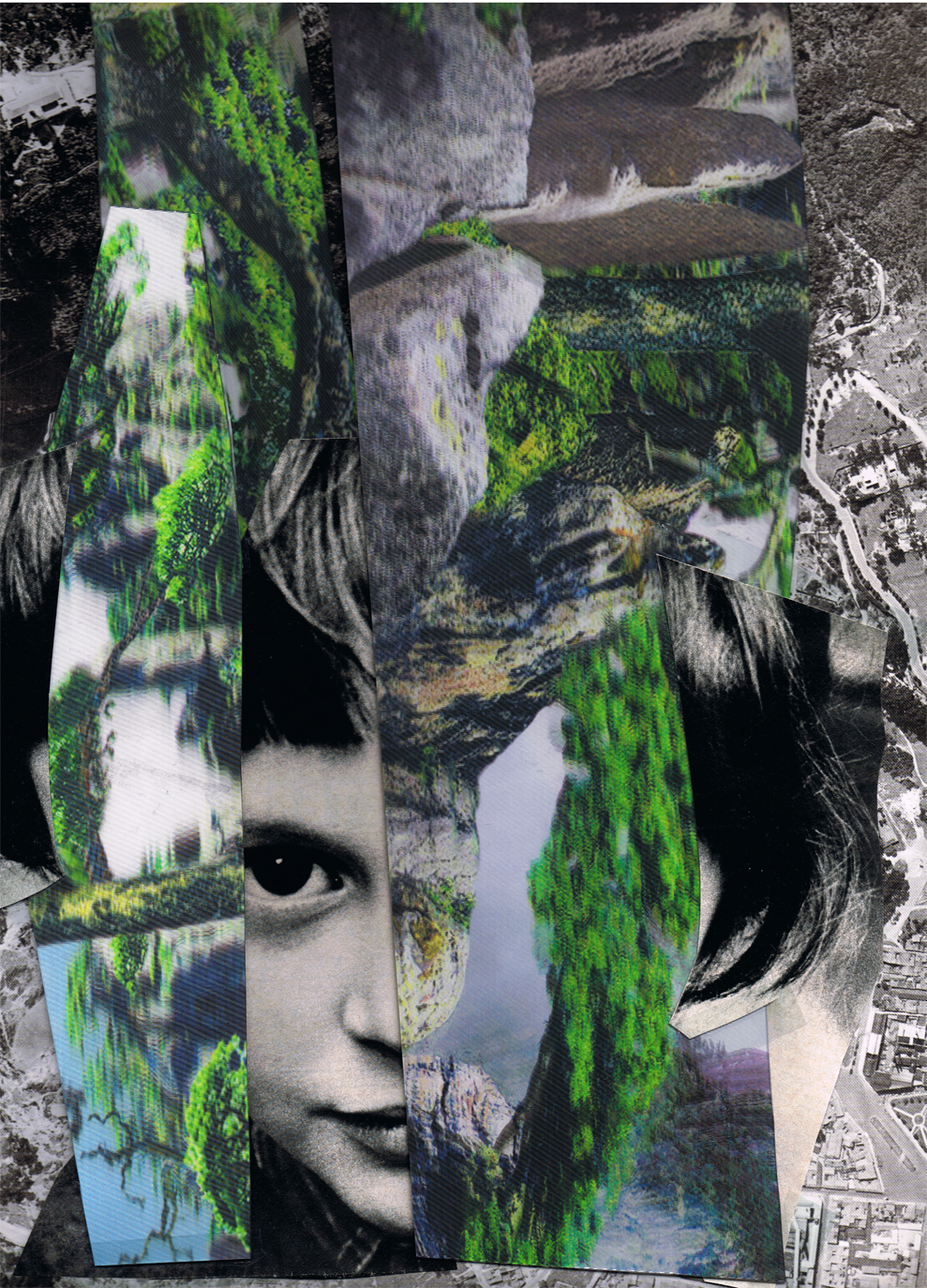
Quizá encontremos aquí un punto en común con las imágenes lenticulares, esas que comúnmente se llaman «en 3D». Se trata, en términos generales, de imágenes en 2D que ensamblan diversos elementos de uno o varios tiempos y espacios, y crean ilusiones de profundidad o de movimiento. La imagen se mueve, pero no va a ninguna parte, y no se mueve «sola»: o bien la persona que la observa la toma entre sus manos y la mueve, o bien tiene que desplazarse un poco frente a la imagen para darle vida. Hay, por tanto, algo parecido a una danza, o, nuevamente, una invitación a jugar. También está el efecto de profundidad entre los elementos de la imagen, que se abomban como relieves que dan ganas de tocar y atravesar. Pero sabemos que imagen también quiere decir «fantasma», y en el caso de las imágenes lenticulares es como si este fantasma nos hiciera una broma y nos dijera: «miren, soy un fantasma y lo que me gusta es bailar».
La imagen lenticular y el collage se emparentan. Ambos medios comparten el hecho de ser máquinas para viajar en el tiempo y realizar recorridos inmóviles por el espacio. El pasado puede encontrarse ante nuestros ojos. El futuro, detrás. Y el presente puede vagar.
A selection of collages and a few drawings made between 2019 and the present.
This selection could take the title of an exhibition I held at sometimeStudio gallery in Paris in 2015: “The future is already here; it’s just not evenly distributed,” a phrase by William Gibson. The text that follows was written then, for that exhibition. It now appears here again, several years later, alongside images that did not yet exist.
There are images that travel across heterogeneous spaces and times and can meet on a common substrate. Suddenly, one image arrives and says to another: “come play with me,” or “let’s make love,” or “better yet, let’s hit each other in the face with the legs of our tables” (Gustave Flaubert). And when two, or several, or an infinity of images play together, we might call that a collage. In collage, all these times, these spaces, all these layers of images come together in a common grammar. A new language unfolds. It is a language that can, for example, howl, or sing, or meow; that is, a language that engenders a somewhat animal-like grammar. The common substrate of these images and this grammar organizes an innocent discordance. It is as if the disorder that brings these images together used them to discover an entirely ineffective, useless order, if you will, but one that at the same time becomes a deliberate, obstinate, humorously heterogeneous order. Thus, the “newness” of this naïve discordance launches a possibility within this grammar.
This comes close, in some way, to Tralfamadorian literature, as described by Kurt Vonnegut in his novel Slaughterhouse-Five. It consists of an assemblage of signs that “constitute a brief and imperative message, describe a situation, a scene. The messages are not linked by any particular connection, but the author has carefully chosen them so that, considered together, they give an image of life that is at once beautiful, surprising, and profound. There is no beginning, middle, or end. There is no suspense, moral, cause, or effect. What seduces us in our books, says a Tralfamadorian, is the relief of so many wonderful moments apprehended simultaneously.” [From the French translation: Kurt Vonnegut, Slaughterhouse-Five, translated from the English by Lucienne Lotringer, Paris, Éditions du Seuil, 1971, p. 82.]
Perhaps we can find here a point of connection with lenticular images, those commonly referred to as “3D.” In general terms, these are 2D images that assemble various elements from one or several times and spaces, creating illusions of depth or movement. The image moves, but goes nowhere, and it does not move “by itself”: either the person looking at it takes it in their hands and moves it, or they have to shift slightly in front of the image to bring it to life. There is therefore something akin to a dance, or, once again, an invitation to play. There is also the effect of depth between the elements of the image, which bulge out like reliefs that make you want to touch them and pass through them. But we know that image also means “ghost,” and in the case of lenticular images, it is as if this ghost were playing a joke on us and saying: “look, I’m a ghost and what I like is to dance.”
The lenticular image and collage are related. Both media share the fact that they are machines for traveling through time and making motionless journeys through space. The past can be found before our eyes. The future, behind us. And the present can wander.